Welcome to KAMA Auto
How to Choose the Right Mini Truck for Africa in 2026
How to Choose the Right Mini Truck for Africa in 2026
Article Body
Choosing the right mini truck for Africa is about much more than comparing prices. For importers, distributors, contractors, and fleet buyers, the ideal vehicle must match local road conditions, cargo needs, fuel availability, after-sales support, and long-term operating costs. A truck that seems affordable at the beginning may become expensive later if it is difficult to maintain or cannot handle the real transport environment.
In many African markets, mini trucks and light-duty commercial vehicles are widely used for urban delivery, agricultural transport, beverage distribution, construction material movement, and small business logistics. That is why buyers need a practical selection strategy instead of focusing only on appearance or initial quotation.
This guide explains the key points to consider when choosing the right mini truck for Africa in 2026.
1. Understand the Real Transport Application
The first step is to define how the vehicle will actually be used. Different transport scenarios require different vehicle configurations.
For example, a mini truck used for city distribution usually needs good fuel economy, easy maneuverability, and convenient loading and unloading. A vehicle used in rural areas or on construction routes may require stronger suspension, higher ground clearance, and a more durable chassis. Agricultural transport may need a larger cargo box and stronger payload performance, while cold chain or food delivery may require a refrigerated body.
Before placing an order, buyers should clearly answer these questions:
What type of cargo will be transported?
What is the average daily load?
Are the roads mainly urban, rural, or mixed?
Is the vehicle for self-use, resale, or fleet operation?
Does the market require a standard cargo body or a customized solution?
When these points are clear, it becomes much easier to choose the right truck platform.
2. Focus on Payload, Not Just Vehicle Size
Many customers assume that a bigger-looking truck automatically means stronger carrying capacity. In reality, payload performance depends on several factors, including chassis strength, axle design, suspension structure, and cargo body dimensions.
A good mini truck for Africa should offer a practical balance between compact size and reliable payload. If the truck is too small for the cargo demand, overloading will reduce vehicle life and increase maintenance costs. If the truck is larger than necessary, it may increase fuel consumption and purchase cost without improving efficiency.
That is why buyers should compare the following technical points carefully:
Rated payload capacity
Cargo box dimensions
Rear axle strength
Frame durability
Tire configuration
Suspension type
For markets where the truck will often carry bottled water, hardware goods, agricultural products, feed, or construction materials, strong structural reliability is especially important.
3. Choose the Right Powertrain for the Local Market
Powertrain selection is one of the most important decisions in commercial vehicle purchasing. Different African markets have different fuel conditions, infrastructure levels, and operating priorities.
Diesel mini trucks remain a practical solution in many countries because they provide strong torque, good fuel efficiency under load, and proven durability in long-distance or heavy-duty applications. Gasoline mini trucks may be more suitable for lighter urban use where lower initial purchase cost is a priority. In some markets, CNG commercial vehicles are also becoming attractive due to lower fuel cost and growing interest in cleaner transport solutions.
For short-distance logistics in selected cities or closed operating environments, electric commercial vehicles may also become part of the product strategy. However, buyers should carefully assess charging infrastructure, route distance, and battery service capacity before making that decision.
The best supplier is usually one that can provide multiple power options and recommend the most suitable solution based on the target market.
4. Road Conditions Matter More Than Brochure Data
Vehicle specifications on paper do not always reflect actual operating performance. This is especially true in markets where road conditions are varied.
A mini truck operating in Africa may need to handle rough roads, uneven loading points, frequent stopping and starting, hot weather, and demanding cargo cycles. Under these conditions, reliability is often more important than advanced but unnecessary features.
Buyers should pay close attention to the following:
Chassis strength
Leaf spring structure
Brake stability
Engine cooling performance
Ease of routine maintenance
Spare parts compatibility
A commercial truck that works reliably every day will always create more value than one with attractive specifications but weak practical durability.
5. Spare Parts Availability Is Critical
One of the most common mistakes importers make is focusing only on vehicle FOB price while ignoring spare parts planning. In commercial vehicle business, after-sales support directly affects customer satisfaction, repeat orders, and brand reputation.
Before purchasing, buyers should ask the supplier:
What spare parts should be included in the first shipment?
Are common maintenance parts easy to supply?
Are technical manuals available in English?
Can the supplier support future parts orders quickly?
Is there support for distributor after-sales training?
For distributors and fleet operators, it is often wise to order a basic spare parts package together with the first batch of vehicles. This helps reduce downtime and improves confidence in local after-sales service.
6. Customization Creates More Market Opportunities
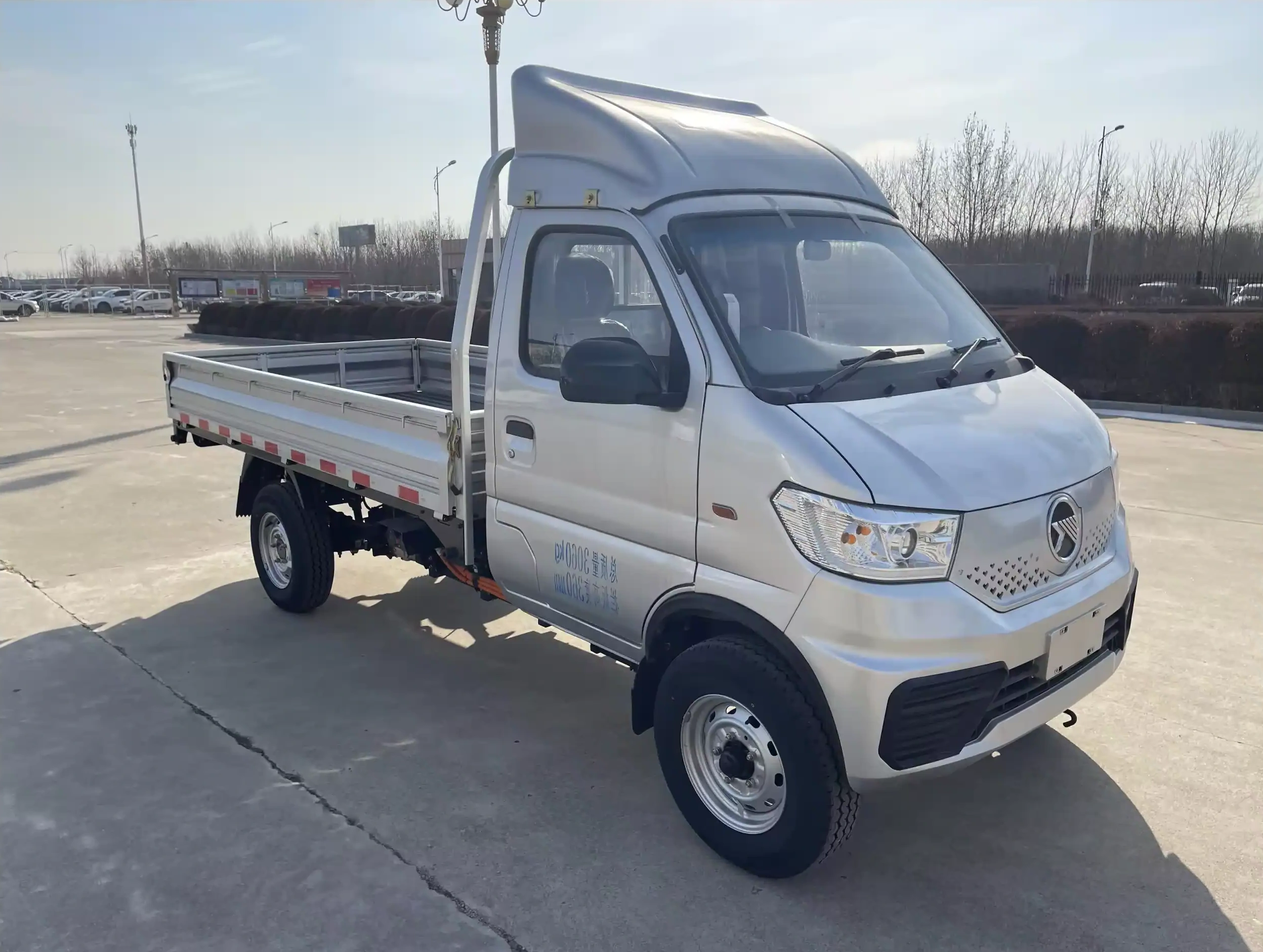
In many African markets, customers do not only need standard cargo trucks. They may also require flatbed trucks, box trucks, refrigerated trucks, stake trucks, advertising vehicles, municipal utility vehicles, or project-based customized solutions.
This is why customization capability is such an important factor when choosing a commercial vehicle supplier. A good manufacturer should be able to provide flexible solutions based on local business demand.
Possible customization options include:
Cargo box type
Cargo box size
Body color
Cabin logo branding
Left-hand drive configuration
Powertrain options
Chassis adaptation for local assembly
CKD / SKD cooperation
For distributors, this flexibility means they can serve more industries with one platform and respond faster to market opportunities.
7. Manufacturer Strength Matters in Long-Term Cooperation
When sourcing mini trucks for Africa, buyers should understand whether they are working with a real manufacturer or only a trading company. A professional manufacturer usually has stronger advantages in production control, configuration flexibility, quality consistency, technical communication, and long-term supply stability.
This becomes especially important when buyers need:
Repeated orders
Product upgrades
Custom branding
Bulk procurement
Tender support
CKD / SKD solutions
Technical confirmation for special projects
A strong manufacturing partner can do more than ship vehicles. It can support the customer’s long-term market development.
8. Price Is Important, but Total Value Is More Important
Competitive price is always important in export business, but the cheapest option is not always the best one. Buyers should evaluate total value instead of only purchase cost.
Total value includes:
Vehicle durability
Fuel economy
Maintenance cost
Spare parts access
Delivery reliability
Customization support
Local resale potential
Customer satisfaction after delivery
A slightly higher-priced truck with better durability and stronger support may create much better long-term profit than a lower-cost product with frequent service issues.
Conclusion
Choosing the right mini truck for Africa in 2026 requires a clear understanding of real transport needs, payload requirements, powertrain suitability, road conditions, spare parts planning, and customization possibilities. The best truck is not simply the cheapest one on paper. It is the one that can operate reliably, fit the local market, and create long-term business value.
For importers, distributors, and fleet buyers, working with an experienced commercial vehicle manufacturer can reduce sourcing risk and improve market competitiveness. Whether the requirement is for standard cargo transport, customized logistics solutions, or local assembly cooperation, selecting the right partner is just as important as selecting the right vehicle.
FAQ
1. What is the most important factor when choosing a mini truck for Africa?
The most important factor is matching the truck to the actual transport scenario, including road conditions, payload needs, route distance, and fuel availability.
2. Is diesel still a good choice for African markets?
Yes. In many African markets, diesel mini trucks remain a practical choice because of strong torque, durability, and fuel efficiency under load.
3. Can one truck platform support different cargo body types?
Yes. Many mini truck platforms can be adapted into flatbed trucks, box trucks, refrigerated trucks, and other customized commercial vehicle solutions.
4. Why is spare parts planning important for truck importers?
Spare parts planning reduces downtime, supports after-sales service, and improves customer confidence after vehicle delivery.
5. Can commercial vehicles be customized for local market needs?
Yes. Professional manufacturers can often support body customization, logo branding, color customization, left-hand drive configuration, and CKD / SKD cooperation.