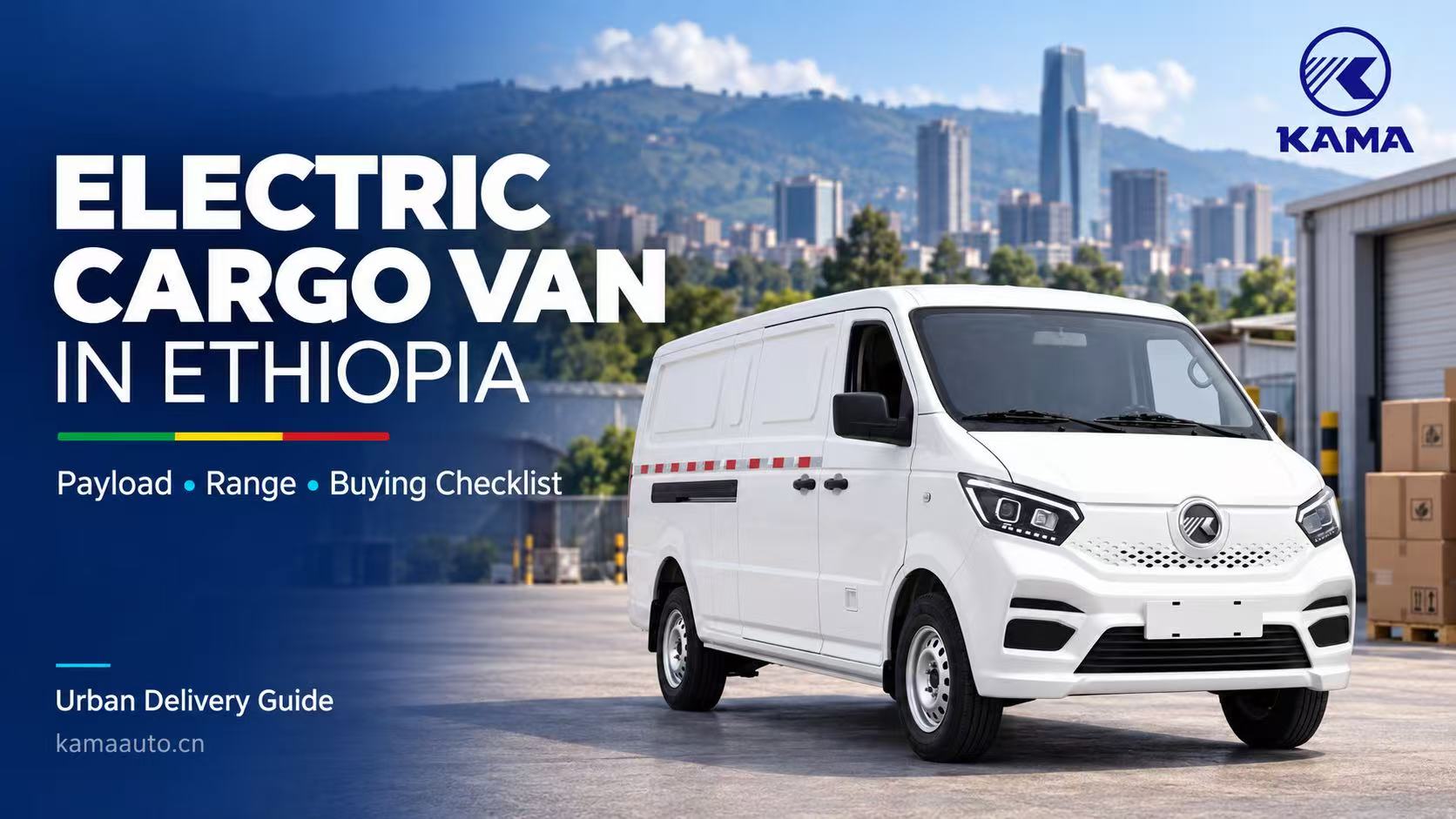
Welcome to KAMA Auto
Why Left-Hand Drive Electric Mini Trucks Are a Smart Choice for African Distributors
Why Left-Hand Drive Electric Mini Trucks Are a Smart Choice for African Commercial Vehicle Distributors in 2026
For African distributors looking for practical and profitable electric commercial vehicles, left-hand drive electric mini trucks are becoming an increasingly attractive option in 2026. Compared with larger EV trucks, they are easier to promote, easier to operate in urban logistics scenarios, and more suitable for customers who need a compact cargo solution for daily delivery, retail transport, and short-distance commercial use.
At KAMA Auto, our electric mini cargo truck is not only designed for efficiency and practicality, but also supports both left-hand drive and right-hand drive configurations for different export markets. For distributors focused on left-hand drive countries, this makes the vehicle easier to match with local road conditions, customer expectations, and fleet procurement requirements.
For many importers, the real question is no longer whether electric commercial vehicles are worth considering. The real question is which type of electric vehicle can generate stronger margins, easier sales conversion, and more repeat business.
In that context, left-hand drive electric mini trucks stand out as one of the most promising categories in 2026.
Why Distributors Are Paying More Attention to Electric Mini Trucks
Compared with larger electric trucks, mini electric cargo trucks are easier to introduce into developing commercial markets. They are more suitable for daily logistics routes, local distribution, retail transportation, last-mile delivery, and light-duty commercial applications.
For buyers and distributors, this means:
lower initial purchasing pressure
easier fleet testing
better suitability for city delivery work
more flexibility for different cargo applications
stronger appeal for small business operators and project clients
This is especially important for distributors who want to enter the electric commercial vehicle segment without starting from oversized or high-risk fleet products.
Why Left-Hand Drive Configuration Matters
Vehicle configuration plays a direct role in market suitability. For distributors serving markets that require left-hand drive vehicles, choosing the correct steering layout from the start reduces adaptation problems and improves customer acceptance.
A left-hand drive electric truck is also easier to integrate into local procurement discussions when buyers are focused on usability, road suitability, and direct fleet deployment.
For commercial importers, this is not a small detail. It affects:
product-market fit
inquiry quality
compliance communication
sales efficiency
final customer confidence
That is why steering configuration should be treated as a core sales feature, not just a technical specification.
Why Electric Mini Trucks Can Be a High-Margin Product Category
For distributors, not every popular product is a profitable product. Some vehicles generate inquiries but face intense price competition. Others may have lower search volume but stronger conversion quality and healthier margins.
Left-hand drive electric mini trucks often perform better in this second category.
They can create stronger profit opportunities because they are positioned at the intersection of several buyer needs:
commercial practicality
electrification trend
urban transport efficiency
lower operating cost expectations
growing interest in new-energy fleet solutions
For suppliers and distributors, that makes them more than a trend product. They become a strategic product line.
What Buyers Usually Care About Most
When a buyer is evaluating a left-hand drive electric cargo truck, the discussion usually focuses on a few core points:
1. Driving range
Customers want to know whether the vehicle can support daily delivery routes, city shuttle transport, or repeated short-haul operations.
2. Cargo capacity
The vehicle must offer practical loading capability for real business use, not just showroom presentation.
3. Battery system
Battery type, charging efficiency, stability, and long-term support all influence buyer confidence.
4. After-sales support
Spare parts, maintenance guidance, and technical support are critical in export business.
5. Customization flexibility
Many distributors want body structure, branding, cargo box, or configuration adjustments based on local market demand.
If your product performs well in these areas, then the article should guide readers toward that strength.
Why KAMA’s Left-Hand Drive Electric Truck Deserves Attention
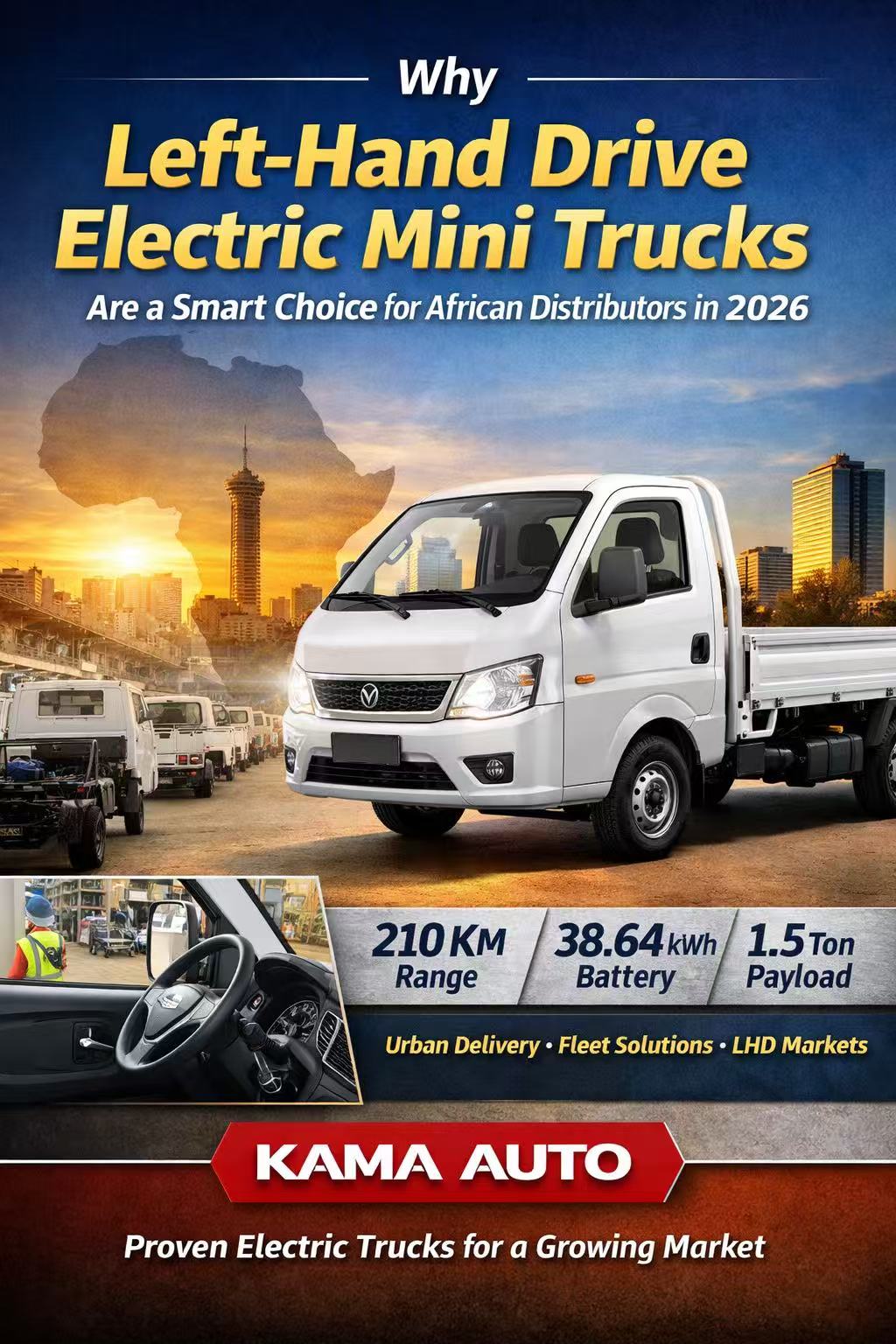
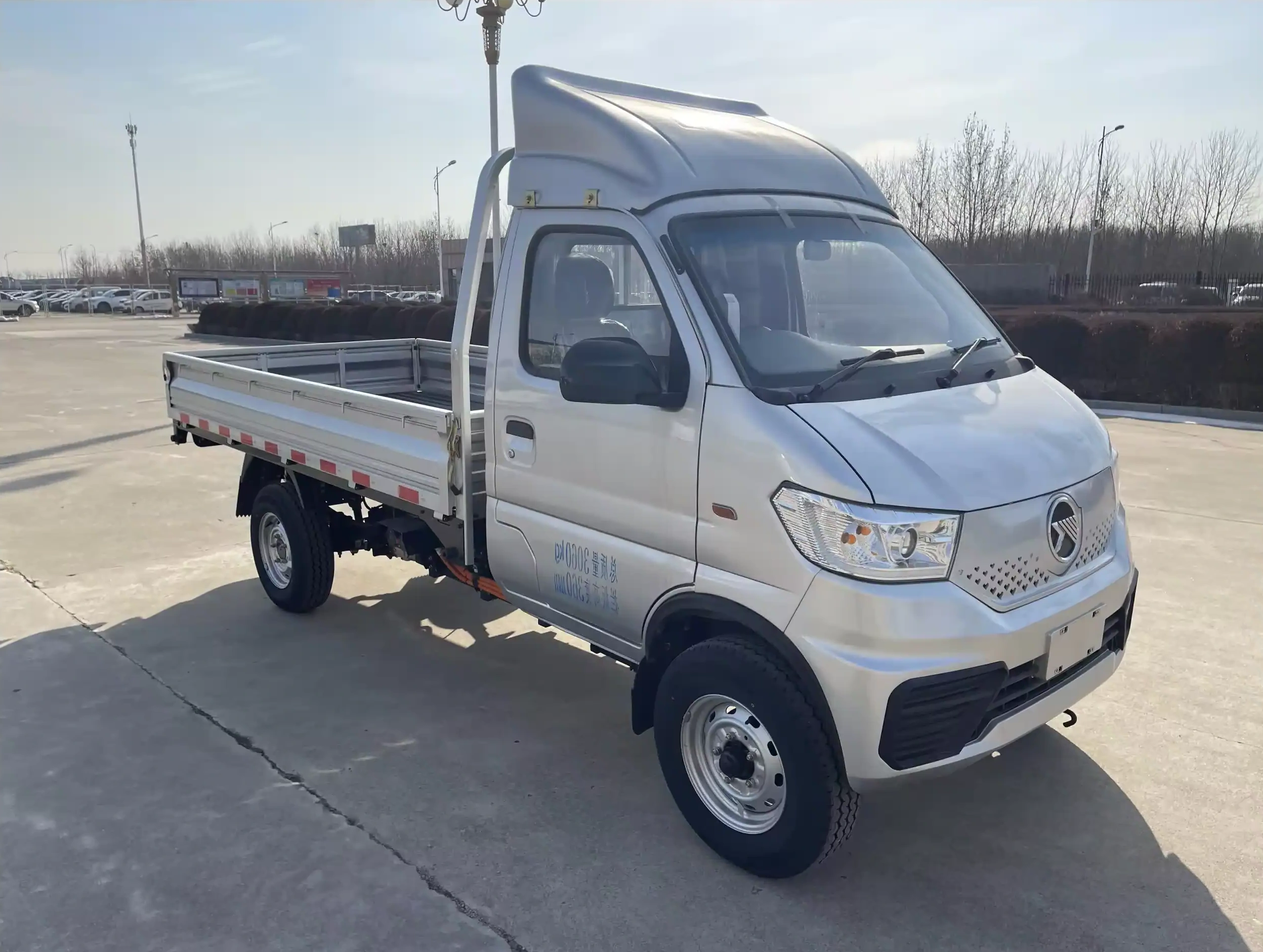
Our KAMA electric mini truck offers a 210 km NEDC driving range, a 38.64 kWh battery pack, and a suggested payload of 1.5 tons, making it a practical option for urban cargo delivery, municipal service, and light-duty transport projects. With a single-cabin layout, compact body size, and flexible charging support, it is well suited for distributors who want a commercially viable EV truck that is both marketable and profitable.
For distributors looking for a practical electric commercial vehicle solution, KAMA’s left-hand drive electric truck is not only a product option but also a business opportunity.
It is suitable for buyers who need:
urban cargo transportation
light commercial fleet deployment
electric delivery vehicle sourcing
project-oriented procurement
long-term distributor cooperation
More importantly, this type of vehicle is easier to position in the market because it combines commercial usefulness with the growing demand for electric transport solutions.
Instead of promoting the vehicle only as a new-energy product, it should be positioned as a profitable urban logistics tool for distributors and fleet buyers.
How to Make This Article Bring More Inquiries
To improve conversion value, this article should not end with general industry discussion. It should naturally lead readers to your actual product page.
A practical structure is:
explain why left-hand drive electric mini trucks matter
explain what buyers should evaluate
introduce your specific KAMA model as a business-ready option
insert product page links
add inquiry CTA for distributors
That way, the article works not just as SEO content, but as a landing path for high-intent buyers.
Conclusion
In 2026, distributors need more than generic product catalogs. They need commercial vehicle products that match market demand and support healthier margins.
For markets where left-hand drive configuration is required, electric mini trucks offer a strong combination of practicality, modern positioning, and business potential. For distributors focused on urban delivery, fleet replacement, and commercial EV opportunities, this category is becoming increasingly important.
KAMA’s left-hand drive electric truck is a strong option for partners who want to build their electric commercial vehicle business with a product that is not only marketable, but also profitable.
If you are looking for a reliable left-hand drive electric cargo truck supplier from China, contact KAMA Auto for product details, customization options, and distributor cooperation.