Welcome to KAMA Auto
Argentina Commercial Vehicle Market 2026 | Import & Distributor Guide
Argentina Commercial Vehicle Market 2026: Chinese Brands, Import Reform and Distributor Opportunities
Argentina's automotive market is undergoing one of its fastest competitive changes in recent years.
Chinese vehicle brands are expanding rapidly, import policies are becoming more open, electric and hybrid vehicles are receiving greater market attention, and vehicle distributors are gaining access to a broader range of international products.
On October 2, 2026, Argentina hosted its first dedicated Chinese auto show in Buenos Aires. Reuters reported that Chinese brands now account for approximately 10% of Argentina's passenger-car and light commercial vehicle market, compared with roughly 2% at the end of 2025. Reuters
For commercial vehicle distributors and fleet operators, however, the important question is not simply whether Chinese brands are gaining market share.
The more useful question is:
What does Argentina's changing automotive market mean for light commercial vehicles, fleet procurement, electric delivery vehicles and new distributor opportunities?
In 2026, several trends are beginning to intersect:
Growing acceptance of Chinese vehicle brands
A more open vehicle import environment
New electric and hybrid vehicle policies
Greater attention to vehicle homologation
Demand for light commercial vehicles
Fleet replacement and operating-cost pressure
New opportunities for distributors and importers
For companies evaluating the Argentina commercial vehicle market, this creates opportunities—but it also makes regulatory and product selection increasingly important.
1. Why Argentina's Commercial Vehicle Market Is Worth Watching in 2026
Argentina has a large and diversified economy where road transportation remains essential to business activity.
Commercial vehicles are used across:
Agriculture
Food distribution
Retail logistics
Construction
Industrial supply
Service fleets
Urban delivery
Regional distribution
Passenger transportation
The market includes everything from compact delivery vehicles and cargo vans to pickups, light trucks and heavier commercial vehicles.
What is changing in 2026 is the competitive environment.
Chinese vehicle manufacturers are entering Argentina more aggressively, while buyers and distributors are becoming more familiar with Chinese automotive products.
Reuters reported that Chinese brands' combined share of Argentina's passenger-car and light-commercial-vehicle market has risen to about 10%, a significant increase from late 2025. Reuters
This does not mean every new Chinese commercial vehicle will succeed.
But it does mean one traditional barrier—the lack of customer familiarity with Chinese automotive brands—is beginning to weaken.
For distributors, that creates more room to evaluate new:
Light trucks
Electric mini trucks
Cargo vans
Passenger vans
Commercial EVs
Specialized fleet vehicles
based on application and commercial value rather than brand origin alone.
2. Chinese Vehicle Growth Changes the Competitive Environment
The rapid increase in Chinese vehicle presence is important because commercial vehicle purchasing is highly influenced by market confidence.
A distributor introducing a new vehicle must normally answer questions such as:
Is the manufacturer established?
Are spare parts available?
Can the vehicle be serviced locally?
Is the product suitable for local roads?
Can the model be homologated?
Will future orders use the same specification?
When an entire group of Chinese automotive brands becomes more visible, customers begin to evaluate individual products more objectively.
This can benefit commercial vehicle manufacturers as well.
A fleet buyer may be more willing to evaluate a Chinese light truck or electric delivery van if Chinese vehicles are already visible in the local passenger-car market.
However, commercial vehicles require a different purchasing process.
A fleet does not buy a truck primarily because it is fashionable.
It buys the vehicle because it needs to perform work.
For this reason, the next stage of Chinese commercial vehicle expansion in Argentina will depend heavily on:
Payload + Reliability + Compliance + After-Sales + Operating Cost
rather than simply vehicle price.
3. Light Commercial Vehicles Have Multiple Applications in Argentina
The term light commercial vehicle covers several different vehicle architectures.
For distributors, understanding the application is more useful than simply choosing one product category.
Mini Trucks
Compact trucks can serve:
Small business distribution
Agricultural transport
Hardware delivery
Retail logistics
Local construction supply
Their advantage is usually compact size combined with an open cargo platform.
Light Trucks
A larger light truck may be more suitable when buyers require:
Higher payload
Longer cargo bodies
Box-body installation
Refrigerated transportation
Industrial logistics
Regional distribution
The correct payload class should be selected according to the actual cargo rather than the maximum available vehicle capacity.
Cargo Vans
A commercial cargo van provides enclosed cargo space.
This can be more suitable for:
Parcels
Pharmaceuticals
Electronics
Food products
Spare parts
Service equipment
Cargo security and weather protection are often more important than open-bed flexibility in these applications.
Passenger Vans and Minibuses
Passenger commercial vehicles can support:
Staff transport
Hotel shuttle
Tourism
Commercial passenger routes
Corporate transportation
These categories create opportunities beyond conventional truck sales.
For an automotive distributor, a diversified commercial vehicle lineup can therefore reduce dependence on one segment.
4. Argentina's EV Import Reform Is Opening the Market
One of the major changes affecting Argentina's automotive market is the government's policy toward electric and hybrid vehicle imports.
For 2026, the Argentine government allocated a quota of 50,000 electric and hybrid cars for tariff-free import, including 19,280 units allocated to manufacturers and 30,720 units allocated to importers. More than 160,000 units were reportedly requested, significantly exceeding the available quota. 阿根廷政府网站
The quota covers several types of electrified passenger vehicles, including:
Battery electric vehicles
Conventional hybrids
Plug-in hybrids
Mild hybrids
The government has also recently announced higher FOB value ceilings for future tariff-free EV and hybrid imports, reflecting changes in vehicle technology and market pricing. 阿根廷政府网站
For commercial vehicle buyers, however, an important distinction is necessary.
The passenger-vehicle quota should not automatically be interpreted as a tariff exemption for every electric commercial vehicle.
Eligibility depends on:
Vehicle category
Customs classification
Current tariff schedule
Import program
Applicable regulations
A commercial vehicle importer should therefore confirm the exact classification before calculating landed cost.
This is particularly important for electric trucks and cargo vans.
5. Import Regulation Should Be Checked Before Vehicle Selection
One of the most expensive mistakes an importer can make is choosing a vehicle first and researching local regulations later.
For the Argentina commercial vehicle market, a better process begins with regulatory classification.
Importers should confirm:
Vehicle Category
Is the vehicle classified as:
Passenger vehicle
Light commercial vehicle
Truck
Van
Minibus
Special-purpose vehicle
Powertrain
Is it:
Gasoline
Diesel
Battery electric
Hybrid
CNG
Customs Classification
The exact tariff classification can affect:
Duty
Taxes
Import eligibility
Documentation
Homologation
Can the model obtain the required approval for local registration?
Only after these issues are understood should the final vehicle configuration be selected.
6. Vehicle Homologation Is a Critical Step
Vehicle homologation is particularly important when a distributor introduces a model that has not previously been registered in Argentina.
Argentina's current regulatory framework requires manufacturers or importers to demonstrate compliance with active and passive safety requirements and applicable environmental standards.
The framework provides for vehicle approvals including the LCM and LCA, and the manufacturer or importer must submit the required application and compliance information. It also allows total or partial recognition of certifications issued by other recognized authorities. 阿根廷政府网站
The regulation specifically recognizes certain vehicle certifications issued under United Nations frameworks, including certifications from bodies recognized under TRANS/WP.29/343. 阿根廷政府网站
For an importer, this means the correct question is not:
“Does this vehicle have a certificate?”
The better question is:
“Which certification documents for this exact vehicle configuration can be used in the Argentine homologation process?”
That distinction matters.
The certification may depend on:
Vehicle category
Brake system
Lighting
Safety equipment
Gross vehicle weight
Powertrain
Electric drive system
Battery
Vehicle dimensions
Changing the configuration after homologation work begins can create additional technical and regulatory work.
7. Electric Commercial Vehicles Need Their Own Business Case
The growing visibility of electric cars does not mean every commercial fleet should immediately switch to EVs.
Commercial vehicles operate differently from private cars.
A fleet buyer usually cares about:
Daily mileage
Payload
Cargo volume
Number of working hours
Charging availability
Downtime
Energy cost
Maintenance
Spare parts
This means an electric commercial vehicle is most attractive when the route is predictable.
For example, an urban delivery vehicle may:
Leave a warehouse every morning
Complete a fixed delivery route
Travel a predictable daily distance
Return to the same depot
Charge overnight
That operating model is much easier to electrify than unpredictable long-distance transportation.
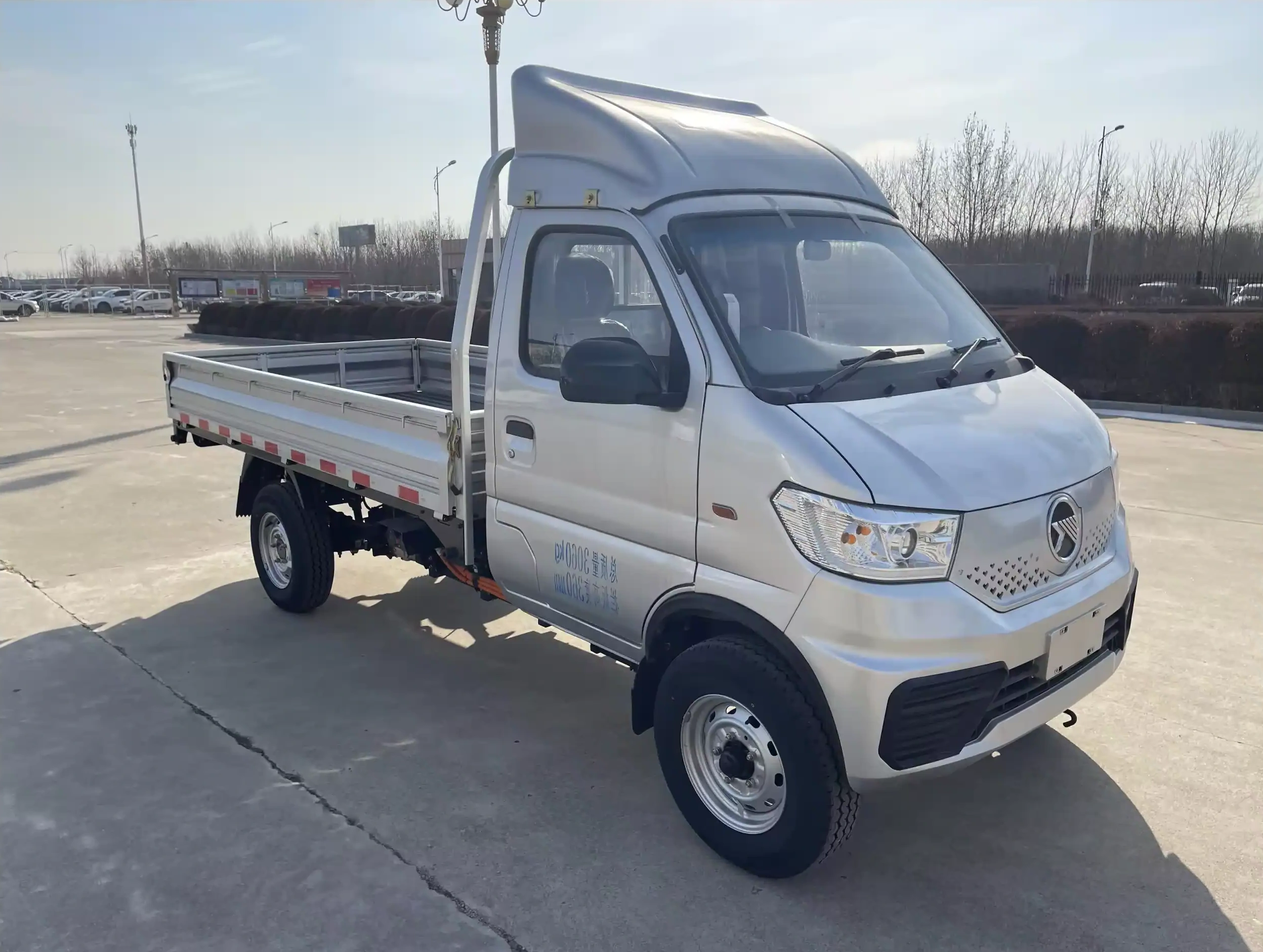
8. Electric Mini Trucks Could Serve Urban Business Logistics
An electric mini truck can be useful where a business needs an open cargo platform but does not require a larger light truck.
Potential applications in Argentina may include:
Urban retail distribution
Agricultural product transport
Industrial parks
Hardware delivery
Municipal service
Local construction supply
The most important specifications include:
Payload
Cargo bed length
Battery capacity
Daily range
Ground clearance
Charging system
For fleet buyers, the advertised range should always be evaluated under realistic load conditions.
A vehicle travelling 200 km empty is not necessarily suitable for a 200 km daily route carrying commercial cargo.
9. Electric Cargo Vans for Urban Delivery
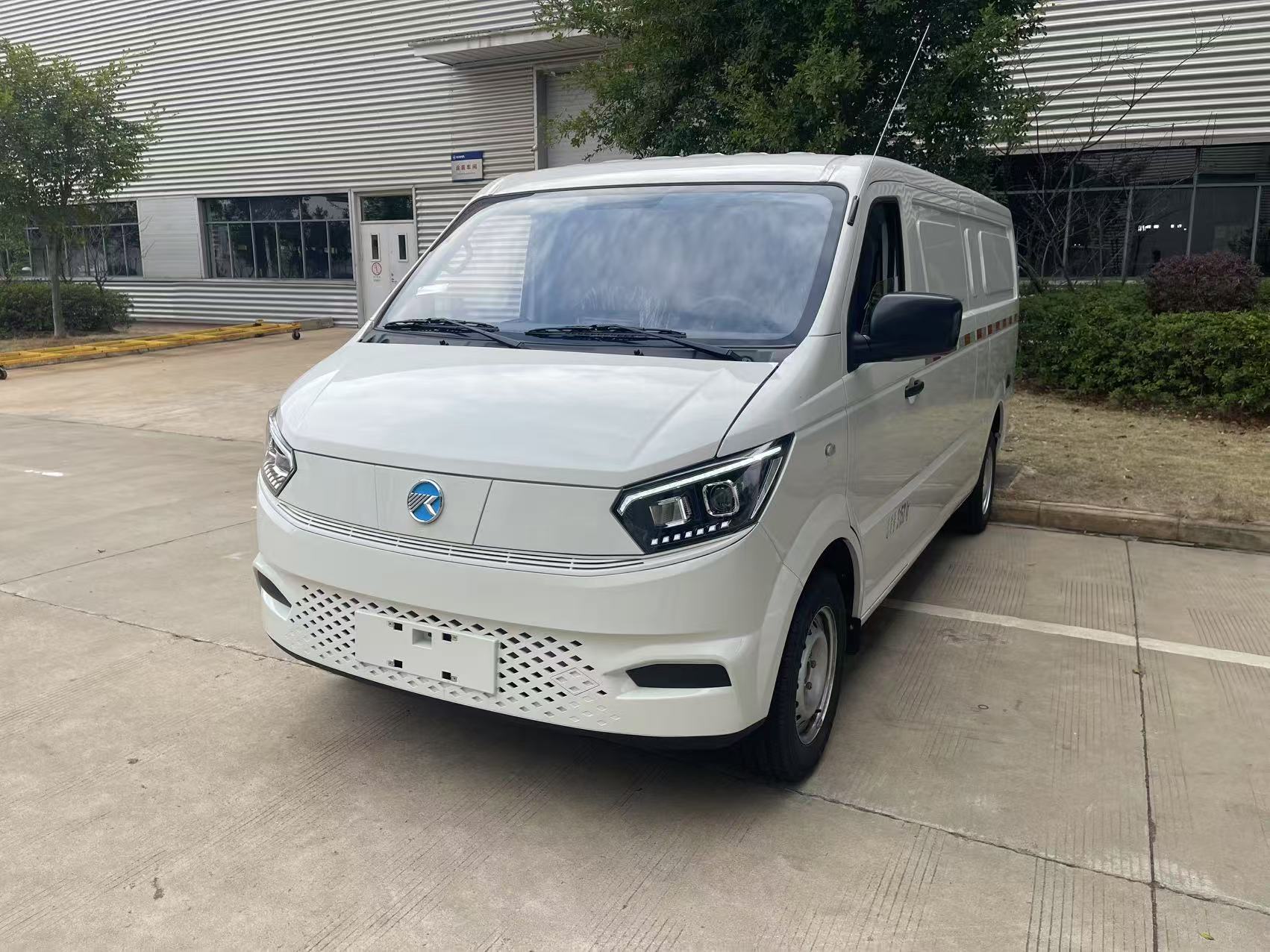
A different opportunity exists for the electric cargo van.
An enclosed electric delivery vehicle may be particularly useful for:
E-commerce
Parcel delivery
Pharmaceutical distribution
Retail replenishment
Food delivery
Service fleets
The main advantage is cargo protection.
For businesses transporting high-value or weather-sensitive products, an enclosed van may be more suitable than an open-bed truck.
Fleet buyers should compare:
Cargo Volume
How many cubic metres are required?
Payload
How heavy is the typical load?
Daily Route
How many kilometres does the vehicle travel?
Charging Window
How many hours can the vehicle remain parked?
These four variables often provide a better starting point than maximum battery size.
Buyers evaluating this category can also review our electric cargo van solutions for different cargo-volume and payload configurations.
10. Light Trucks Remain Important for Agriculture and Distribution
Argentina's commercial vehicle opportunity should not be reduced to electric vehicles.
Conventional light trucks remain highly relevant for:
Agricultural businesses
Regional logistics
Food distribution
Construction
Industrial operations
In many applications, gasoline or diesel may remain the more practical choice.
This is especially true where:
Daily mileage is high
Charging access is limited
Routes are unpredictable
Vehicles operate far from major cities
Heavy loads are common
A distributor should therefore avoid building a product portfolio around only one energy type.
The strongest commercial vehicle strategy may combine:
Fuel Vehicles + Electric Vehicles
according to operating scenario.
11. Fleet Procurement Should Start With Route Data
For fleet buyers, vehicle procurement should begin with an operational study.
A useful fleet procurement questionnaire includes:
Daily Mileage
How many kilometres does each vehicle travel?
Average Payload
What does it carry most days?
Maximum Payload
What is the heaviest normal load?
Cargo Type
Parcels, food, agricultural products, construction materials or passengers?
Route
Urban, highway, rural or mixed?
Vehicle Operating Hours
One shift or two?
Parking
Where does the vehicle stay overnight?
Charging
Can the fleet install charging at its own facility?
These questions can eliminate unsuitable vehicles before the buyer spends money on samples or homologation.
12. A Pilot Fleet Can Reduce Procurement Risk
For a new electric vehicle platform, a distributor or fleet operator may benefit from beginning with a controlled pilot.
The pilot can measure:
Real-world driving range
Energy consumption
Payload performance
Driver feedback
Charging time
Maintenance
Vehicle uptime
Spare-parts requirements
A structured process could be:
Sample / Pilot
↓
Local Route Testing
↓
Technical Feedback
↓
Configuration Adjustment
↓
Larger Fleet Order
This approach provides real operating data before a large procurement decision.
For more detail, see our commercial EV fleet pilot guide.
13. Spare Parts Matter More Than the Initial Vehicle Price
Commercial vehicles are revenue-producing assets.
If a truck or van cannot operate, the fleet may immediately lose money.
This means distributors need to evaluate after-sales capability before increasing sales volume.
Important areas include:
Fast-moving spare parts
Brake parts
Suspension components
Filters
Electrical components
Diagnostic equipment
Body parts
Maintenance manuals
For electric commercial vehicles, additional technical support may include:
Battery
BMS
Motor
Motor controller
Charging system
High-voltage components
A vehicle with a slightly lower purchase price can become more expensive if replacement parts are unavailable.
Therefore, commercial fleet procurement should focus on total vehicle uptime, not only FOB price.
14. Charging Infrastructure Must Be Planned With the Fleet
For electric fleet projects, charging is part of the vehicle system.
A fleet should calculate:
Number of vehicles
×
Daily energy consumption
×
Available charging time
before selecting charging equipment.
A business operating 20 delivery vans that return to the depot at 6 PM has a different charging requirement from a company operating three vehicles on flexible schedules.
The objective is not to install the largest possible charger.
It is to install enough charging capacity to keep the fleet operating efficiently.
More information is available in our EV fleet charging guide.
15. CBU Can Be the First Step for a New Distributor
When introducing a new commercial vehicle, importing complete vehicles can provide a lower-complexity route for initial market testing.
CBU allows the distributor to evaluate:
Customer response
Registration
Vehicle reliability
Pricing
Spare-parts demand
Local operating conditions
before considering deeper localization.
This is particularly useful when homologation requires meaningful investment.
A distributor should ideally validate actual demand before building a local assembly program.
16. Local Assembly May Become Relevant at Higher Volume
If annual sales increase, local assembly can become worth evaluating.
Possible stages include:
CBU
Complete vehicle import for initial market development.
SKD
Partial local assembly requiring greater technical and operational capability.
CKD
Deeper assembly requiring industrial investment, quality systems and production management.
However, local assembly should never be assumed to be automatically cheaper.
The business case depends on:
Annual sales volume
Import duties
Local labor
Investment
Component logistics
Assembly equipment
Quality control
Local regulation
For a small-volume distributor, complete vehicles may remain more efficient.
For a larger long-term project, local assembly may offer strategic advantages.
17. What Argentine Distributors Should Check Before Adding a New Vehicle Brand
The rapid growth of Chinese brands may make market entry easier, but distributors should still conduct careful due diligence.
Before committing to a new commercial vehicle line, a distributor should evaluate:
Market Segment
Who will buy the vehicle?
Annual Sales Potential
Is the market large enough to justify homologation?
Vehicle Compliance
What approvals are required?
Spare Parts
Can parts be stocked locally?
Workshop Capability
Can technicians maintain the vehicle?
Model Continuity
Will the same vehicle remain available for repeat orders?
Supplier Technical Support
Can the manufacturer support configuration questions and fault diagnosis?
Fleet Customers
Are there logistics companies, distributors or project customers that can validate the product?
A commercial vehicle distribution agreement should be based on a business plan, not only a low initial vehicle price.
18. Commercial Vehicle Manufacturer Selection Is Different From Normal Product Sourcing
Commercial vehicles are regulated, service-dependent products.
For this reason, an importer should evaluate more than:
“Who offers the cheapest truck?”
A stronger supplier evaluation should include:
Manufacturing capability
Technical documentation
Configuration consistency
Certification support
Spare-parts system
Export experience
Quality control
After-sales support
For long-term vehicle distribution, the factory-distributor relationship may continue for many years.
The lowest initial FOB price therefore does not necessarily create the lowest long-term business cost.
19. What the 2026 Market Shift Means for Commercial Vehicle Distributors
The recent rise of Chinese automotive brands in Argentina is significant.
A move from approximately 2% market share in late 2025 to about 10% of the passenger-car and light-commercial-vehicle market in 2026 indicates that market acceptance is changing rapidly. Reuters
For commercial vehicle distributors, this reduces one historical barrier.
Chinese vehicle platforms no longer need to be introduced into a market where customers have almost no experience with Chinese automotive brands.
However, this does not eliminate the need for strong local execution.
Commercial vehicle success will depend on:
Correct Product
Homologation
Distribution
After-Sales
Spare Parts
Fleet Economics
The distributors that manage these areas well are more likely to build sustainable business than those competing only on price.
20. Argentina's Commercial Vehicle Opportunity Is Becoming More Structured
Argentina's automotive environment in 2026 is changing on several fronts at the same time.
Chinese brands are expanding.
Import regulations are becoming more open in selected vehicle categories.
Electric mobility is gaining visibility.
Homologation remains a critical requirement.
And commercial fleets continue to need practical vehicles for logistics, agriculture, construction and service operations.
For distributors, this creates a more sophisticated market.
The question is no longer simply:
“Which Chinese vehicle can I import?”
The better question is:
“Which vehicle category, certification pathway and fleet application can support a sustainable commercial business in Argentina?”
That shift—from product sourcing to market strategy—will become increasingly important as competition grows.
Commercial Vehicle Cooperation for Argentina
KAMA's commercial vehicle portfolio covers several categories that can be evaluated for international markets, including:
Electric mini trucks
Electric light trucks
Electric cargo vans
Passenger vans
Minibuses
Gasoline and diesel commercial vehicles
Chassis platforms
Local assembly solutions
For Argentina, however, product selection should begin with the local regulatory pathway and business application, not simply vehicle availability.
Before a quotation or project recommendation is prepared, buyers should ideally confirm:
Company Name:
Target Vehicle Category:
Required Payload or Seats:
Fuel / Diesel / Electric:
First Order Quantity:
Annual Purchase Plan:
Main Application:
Daily Mileage:
Destination Port:
Homologation Status / Requirement:
Workshop & After-Sales Capability:
CBU / SKD / CKD Plan:
Final vehicle availability, configuration, homologation feasibility and commercial terms should be confirmed according to the specific model and project.
Frequently Asked Questions
Is Argentina's commercial vehicle market becoming more open to Chinese brands?
Yes. Reuters reported in October 2026 that Chinese brands had reached around 10% of Argentina's combined passenger-car and light-commercial-vehicle market, up from roughly 2% at the end of 2025. Reuters
Does Argentina have a zero-tariff EV import policy?
Argentina allocated a 2026 quota of 50,000 qualifying electric and hybrid cars for tariff-free import. However, this should not be interpreted as automatically applying to every electric commercial vehicle; eligibility depends on vehicle category and current regulation. 阿根廷政府网站
What is vehicle homologation in Argentina?
Manufacturers or importers must demonstrate compliance with applicable safety and environmental requirements and obtain the relevant approvals. Argentina's current framework provides procedures for LCM/LCA and allows recognition of certain international certifications. 阿根廷政府网站
Are electric mini trucks suitable for Argentina?
They may be suitable for urban and short-distance commercial operations where payload, daily mileage and charging can be controlled. Suitability should be determined from the actual duty cycle.
Are electric cargo vans suitable for urban delivery?
Electric cargo vans may be suitable for parcel, pharmacy, retail and service fleets operating predictable urban routes, particularly where depot charging is available.
Should a distributor begin with a large order?
For an untested vehicle platform, a smaller pilot can help validate homologation, real-world performance, customer demand and service requirements before scaling procurement.
Can SKD or CKD assembly be considered later?
Potentially yes. Local assembly becomes more relevant when annual volume, investment capability and regulatory conditions justify it. It should be evaluated as a long-term industrial project rather than assumed to be the lowest-cost option.