Welcome to KAMA Auto
South Africa Commercial Vehicle Market 2026: What Distributors Should Watch as Chinese Brands Expand
South Africa Commercial Vehicle Market 2026: What Distributors Should Watch as Chinese Brands Expand
South Africa is becoming one of the most important automotive markets to watch in Africa in 2026.
For many years, the country's vehicle market has been dominated by established Japanese, European and American brands. Toyota, Ford, Isuzu and other long-established manufacturers have built strong positions in passenger vehicles, pickups and commercial transportation.
But the competitive landscape is changing.
Chinese automotive brands are expanding rapidly across South Africa, bringing broader product portfolios, more competitive pricing and a growing range of electrified vehicles.
For commercial vehicle distributors, importers and fleet operators, this change creates an important question:
What does the growing acceptance of Chinese vehicles mean for South Africa's commercial vehicle market?
The opportunity is not simply about introducing another vehicle brand. It is about understanding where commercial demand is developing, which vehicle categories make sense, and how distributors should prepare for a more competitive and increasingly diversified market.
1. Chinese Vehicle Brands Are Becoming More Visible in South Africa
One of the clearest market signals arrived at the 2026 WesBank Festival of Motoring in Johannesburg.
Chinese manufacturers used the event to introduce and expand a wide range of vehicles, including battery-electric vehicles, hybrids, range-extended vehicles and pickups.
Reuters reported that brands including Changan, Dongfeng, BAIC, Geely-related Riddara and Chery-related brands were expanding their South African portfolios.
More importantly, the change is not limited to vehicle launches.
WesBank CEO Robert Gwerengwe said that approximately 40% of the new vehicles financed by the company in the previous month were Chinese vehicles, compared with only around 0.01% in 2016.
That represents a major change in market acceptance.
For commercial vehicle distributors, the important signal is clear:
Chinese automotive brands are no longer unfamiliar alternatives in South Africa.
Customers are becoming increasingly comfortable evaluating Chinese products alongside established international brands.
That can reduce one of the traditional barriers faced by new commercial vehicle brands entering the market.
2. Why the South African Market Matters for Commercial Vehicles
South Africa is different from many other African automotive markets.
It has a relatively mature vehicle industry, established dealer networks, a significant automotive manufacturing base and sophisticated fleet customers.
Commercial vehicles support a wide range of economic activities, including urban logistics, construction, agriculture, retail distribution, municipal operations, tourism and passenger transportation.
This means that vehicle buyers often evaluate more than the initial purchase price.
Factors such as payload, reliability, spare parts availability, serviceability, fuel or electricity cost and long-term operating efficiency can have a major influence on purchasing decisions.
For a distributor entering this market, simply offering a low-cost vehicle may therefore not be enough.
The stronger opportunity is to offer a product that fits a clearly defined commercial application.
3. Light Commercial Vehicles Remain an Important Segment
South Africa has a particularly strong culture around pickups and light commercial vehicles.
This is visible in both private and commercial transportation.
Pickup trucks, mini trucks, vans and other light commercial vehicles can serve construction companies, farms, small businesses, logistics operators and technical service companies.
The recent expansion of Chinese brands into South Africa's highly competitive pickup segment also demonstrates how strategically important this vehicle category remains.
Reuters noted that Chinese manufacturers are increasingly challenging a pickup market historically dominated by manufacturers such as Toyota, Ford and Isuzu.
For distributors evaluating new commercial vehicle opportunities, however, competing directly in the mainstream lifestyle pickup market is not the only option.
There are also more specialized commercial segments where practical utility matters more than brand prestige.
Compact delivery trucks, urban cargo vehicles, commercial vans and dedicated fleet vehicles can all address specific business applications.
4. Fleet Buyers Create a Different Opportunity from Retail Buyers
Retail vehicle customers and fleet customers make purchasing decisions differently.
A retail buyer may focus heavily on design, brand recognition, financing and resale value.
Fleet operators usually evaluate the vehicle as an operating asset.
Their questions are more likely to include:
How much payload can the vehicle carry?
How many kilometres will it operate every day?
How frequently will maintenance be required?
How quickly can spare parts be supplied?
Can several vehicles use the same parts and maintenance system?
Is the vehicle suitable for fixed urban routes or longer regional routes?
Can the supplier maintain consistent specifications for repeat orders?
These questions create an opportunity for commercial vehicle manufacturers that focus on practical working vehicles rather than passenger-car-style marketing.
For new distributors, fleet projects can therefore be an important market-entry channel.
5. New-Energy Vehicles Are Becoming Part of South Africa's Automotive Strategy
South Africa's transition toward new-energy vehicles is still developing, but government policy increasingly recognises the strategic importance of the sector.
From 1 March 2026, qualifying investment in battery-electric and hydrogen-powered vehicle production can benefit from a 150% first-year tax deduction on qualifying production assets.
South Africa's broader automotive strategy also aims to strengthen local manufacturing, increase localisation and support the transition toward new-energy vehicle technologies.
This point needs to be understood carefully.
The policy is primarily designed to encourage local manufacturing investment. It should not be interpreted as a general tax exemption for imported electric vehicles.
For overseas manufacturers and distributors, however, the direction is significant.
It indicates that South Africa is preparing its automotive industry for a more diversified powertrain future that includes battery-electric, hybrid, hydrogen and traditional internal-combustion technologies.
6. Electric Commercial Vehicles Should Be Selected by Operating Scenario
The growth of electric mobility does not mean every commercial vehicle in South Africa should immediately become electric.
For commercial fleets, electrification works best when the operating scenario supports it.
An electric commercial vehicle can be attractive when routes are predictable, daily mileage is controlled and vehicles return to a depot or fixed parking location where charging can be arranged.
Examples may include urban distribution, warehouse-to-store delivery, industrial parks, municipal operations and selected shuttle applications.
Long-distance operations or routes with uncertain charging availability may require a different solution.
This is why distributors should avoid selling electric commercial vehicles only through claims about environmental benefits.
The stronger commercial argument is based on operational suitability.
Vehicle range, battery capacity, payload, charging time, route conditions and local electricity infrastructure should be evaluated together.
7. Charging Infrastructure Is Becoming a Fleet Planning Issue
South Africa's electricity sector is also changing.
In July 2026, the government approved publication of a revised Electricity Pricing Policy for public comment, reflecting broader reforms in the electricity market and tariff structure.
For electric commercial vehicle fleets, charging therefore needs to be considered as part of the operating model.
A fleet does not necessarily require the largest available charger.
The correct charging strategy depends on vehicle battery capacity, daily energy consumption, parking time, number of vehicles and available electrical capacity.
For distributors selling commercial EVs, the ability to discuss charging together with the vehicle can become an important competitive advantage.
However, charging infrastructure should be evaluated according to the customer's actual operating environment rather than assumed in advance.
8. Right-Hand Drive Is Necessary, but It Is Not the Whole Product Strategy
South Africa is a right-hand-drive market.
That makes steering configuration an obvious requirement when evaluating vehicles for the country.
But distributors should not treat RHD configuration as the only selection criterion.
A successful South African commercial vehicle product also needs to fit local expectations regarding payload, vehicle dimensions, road performance, durability, maintenance and regulatory requirements.
This is one reason why vehicle selection should begin with the application rather than simply choosing an available model.
A construction company, supermarket delivery fleet and passenger transport operator may all require completely different vehicle configurations.
For KAMA projects, right-hand-drive availability should therefore be confirmed according to the exact model, production configuration and intended market before quotation.
9. After-Sales Capability Will Become More Important as Chinese Brands Expand
As more Chinese vehicle brands enter South Africa, competition will gradually move beyond purchase price.
Customers will increasingly compare:
vehicle quality, parts availability, technical support, dealer coverage, warranty handling and long-term operating support.
This creates an important lesson for new distributors.
Entering the market without an after-sales strategy may generate initial sales but make long-term growth difficult.
Commercial vehicles are particularly sensitive to downtime because the vehicle is often directly connected to revenue.
A delivery truck that cannot operate for several days creates a business cost for the customer.
For this reason, distributors should consider spare parts, technician capability and maintenance processes before building volume.
10. Local Assembly Could Become a Longer-Term Opportunity
South Africa already has one of Africa's most developed automotive manufacturing ecosystems.
Government policy continues to encourage automotive investment, production volume and increased local content.
The Automotive Investment Scheme provides qualifying incentives for automotive manufacturers and component producers, while the broader South African Automotive Masterplan targets deeper localisation and industry growth.
This makes local assembly strategically interesting for certain long-term commercial vehicle projects.
However, CBU, SKD or CKD should not be selected purely because one method appears cheaper.
The correct approach depends on project scale, local regulations, assembly capability, technical resources, tariff structure and expected annual sales.
For a new distributor, complete vehicles may be more practical for initial market testing.
If demand grows and the local partner develops sufficient technical and commercial capacity, deeper localisation can then be evaluated.
11. What South African Distributors Should Evaluate Before Adding a New Commercial Vehicle Brand
The rapid growth of Chinese brands creates opportunity, but also raises the standard required to compete successfully.
South African distributors should evaluate the complete business model rather than only the vehicle.
The most important questions include market segment, target customer, annual sales potential, vehicle application, after-sales capacity, spare-parts planning, homologation requirements and long-term supplier support.
A distributor entering an already competitive pickup segment may require a very different strategy from a company introducing compact urban delivery vehicles.
Similarly, an electric fleet product requires a different sales and technical support system from a conventional fuel vehicle.
The strongest product strategy usually begins with a clearly defined operating scenario.
12. What the Growth of Chinese Brands Means for KAMA
For KAMA, the expansion of Chinese automotive brands in South Africa creates an important market signal.
It shows that buyers are increasingly willing to consider Chinese vehicle manufacturers and that product choice in the market is becoming more diversified.
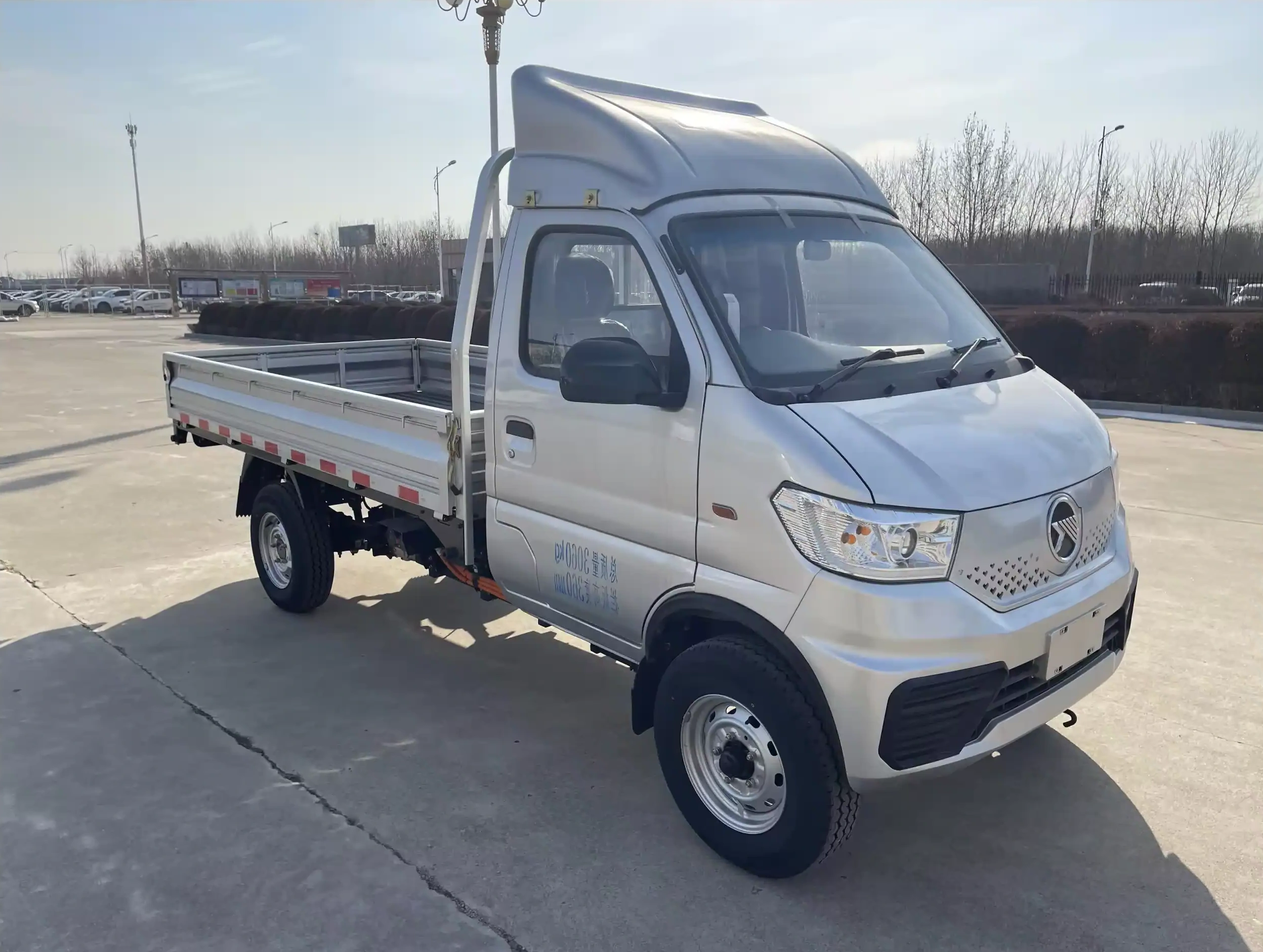
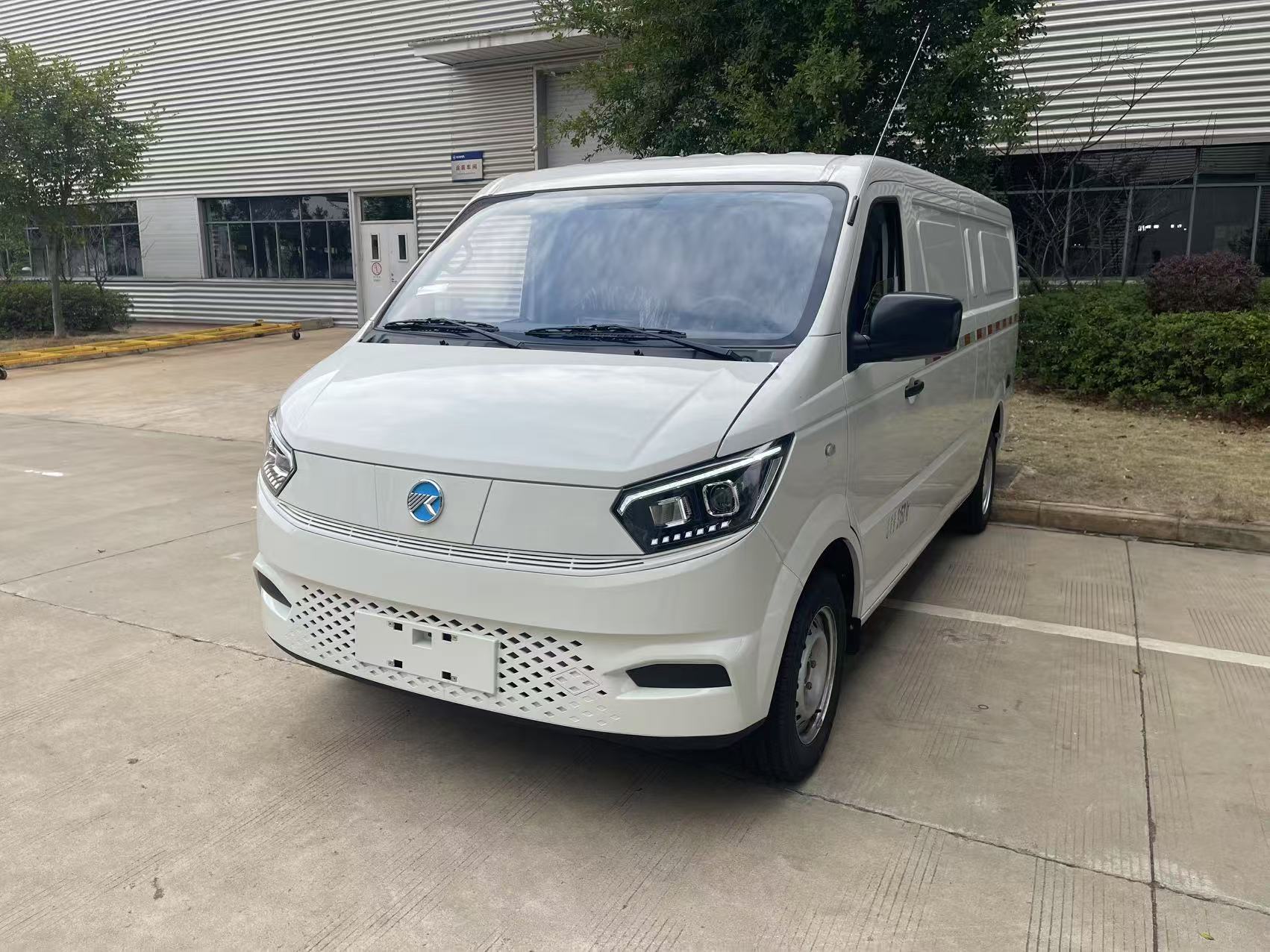
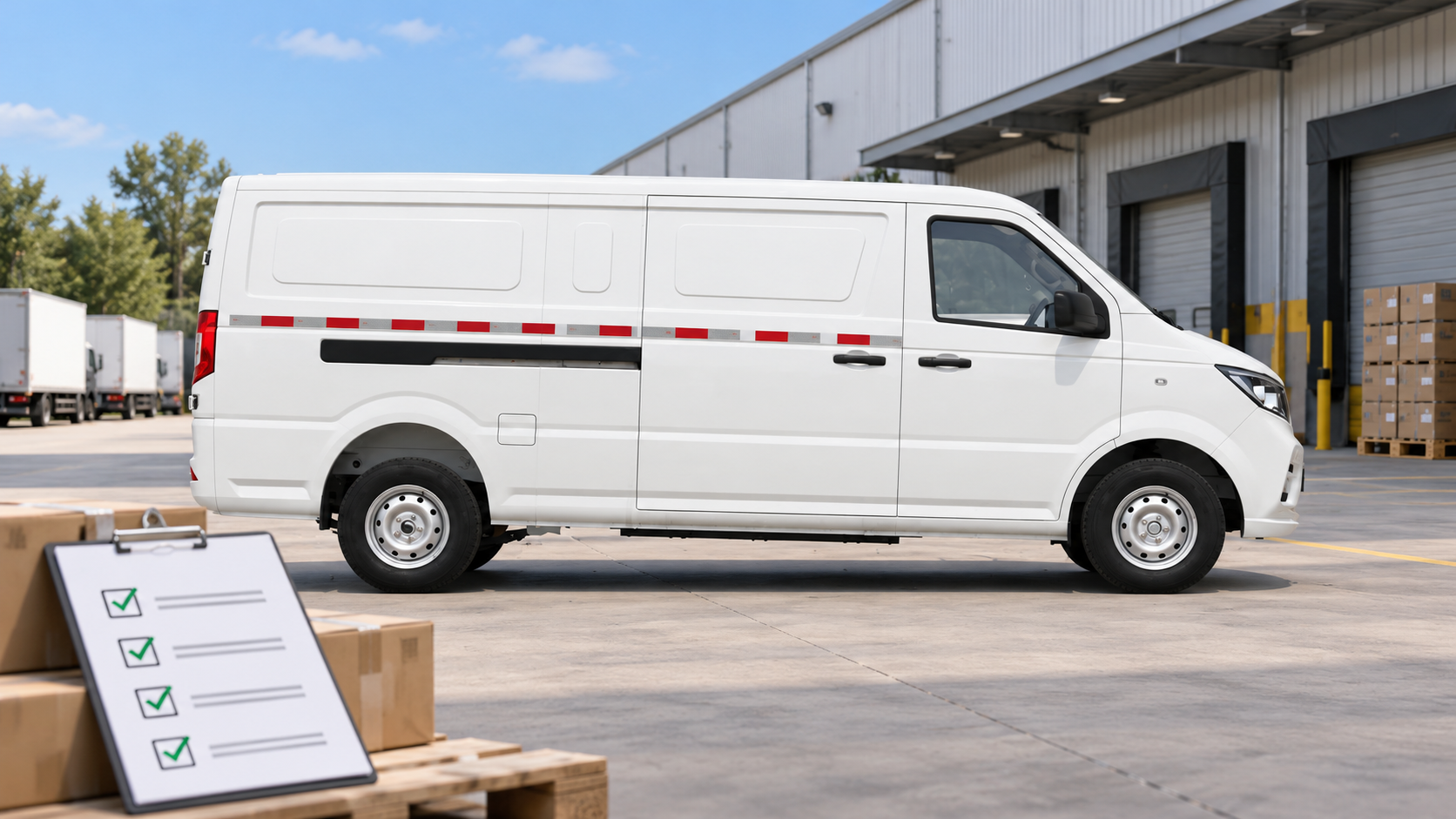
KAMA's relevant commercial vehicle categories include mini trucks, light trucks, electric commercial vehicles, cargo vans, passenger vans and other working-vehicle solutions.
For South Africa, however, the correct approach is not to assume that every model can immediately enter the market.
Before recommending a vehicle, the destination market, intended application, steering configuration, payload requirement, order quantity and local certification or registration requirements should first be confirmed.
This is especially important for distributors looking at long-term market development.
South Africa Could Become an Important Commercial Vehicle Opportunity
South Africa's automotive market is entering an increasingly competitive phase.
Chinese brands are expanding rapidly, new-energy vehicles are receiving more attention, and government policy is encouraging the automotive industry to prepare for the next stage of technology and localisation.
For commercial vehicle distributors, this creates opportunity—but also requires careful product positioning.
The strongest opportunities are likely to come from vehicles that solve clearly defined business problems.
Urban logistics, construction transport, agriculture, fleet delivery, passenger transport and specialized commercial applications all require different vehicle solutions.
Rather than asking only:
“Which Chinese vehicle is cheapest?”
a better question for distributors is:
“Which vehicle can build a sustainable commercial business in our market?”
That is the question that will increasingly shape South Africa's commercial vehicle market in 2026 and beyond.
Looking for Commercial Vehicle Cooperation in South Africa?
KAMA welcomes discussions with qualified vehicle distributors, importers, fleet operators and automotive partners interested in the South African market.
To evaluate a potential project, please provide your company background, target vehicle category, intended application, estimated first order quantity, annual sales plan and local certification or import requirements.
Based on this information, the KAMA team can evaluate suitable vehicle options and potential cooperation models, subject to final technical and market confirmation.
FAQ
Is South Africa an important market for Chinese vehicle brands in 2026?
Yes. Chinese automotive brands have expanded rapidly in South Africa. Recent market activity shows increasing product launches and greater customer acceptance, although competitive conditions vary considerably by vehicle segment.
What commercial vehicle categories may have potential in South Africa?
Potential segments can include pickups, light trucks, mini trucks, cargo vans, fleet vehicles and selected passenger transport vehicles. The suitable segment depends on the target customer and application.
Are electric commercial vehicles suitable for South Africa?
They can be suitable for certain operating scenarios, particularly fixed-route and return-to-base fleets where charging can be planned. Vehicle range, payload, charging infrastructure and route conditions should be evaluated before selection.
Does South Africa use left-hand-drive or right-hand-drive vehicles?
South Africa is a right-hand-drive market. The exact RHD availability of a KAMA vehicle should be confirmed according to model and production configuration.
Is South Africa supporting new-energy vehicles?
South Africa has introduced measures supporting local new-energy vehicle production, including a 150% investment deduction for qualifying battery-electric and hydrogen vehicle manufacturing assets from March 2026. This is a manufacturing incentive and should not be interpreted as a general exemption for imported EVs.
Can SKD or CKD cooperation be considered for South Africa?
It may be considered for suitable long-term projects, but feasibility depends on order volume, local assembly resources, regulations, taxation, homologation and factory evaluation.