Welcome to KAMA Auto
Importing Commercial Vehicles into Nigeria in 2026: A Guide for Distributors and Fleet Buyers
Importing Commercial Vehicles into Nigeria in 2026: A Guide for Distributors and Fleet Buyers
Nigeria remains one of Africa's most important markets for vehicle importers, distributors and commercial fleet operators.
The country has a large population, a highly road-dependent logistics system and continuous demand for vehicles used in distribution, construction, agriculture, passenger transportation and small-business operations.
But importing commercial vehicles into Nigeria is not simply a matter of selecting a truck in China and arranging ocean freight.
Importers need to understand vehicle suitability, regulatory documentation, customs procedures, conformity requirements, local after-sales capability and the long-term economics of importing complete vehicles versus developing local assembly.
In 2026, this process is becoming even more important as Nigeria continues to modernize its trade systems and automotive industrial policy.
This guide explains the key issues commercial vehicle distributors and fleet buyers should evaluate before starting a Nigerian vehicle project.
1. Why Nigeria Remains an Important Commercial Vehicle Market
Commercial vehicles play an essential role in Nigeria's economy.
Trucks, vans and minibuses are widely used for:
Urban logistics
FMCG distribution
Construction
Agriculture
Wholesale and retail delivery
Passenger transport
Industrial operations
Government and municipal projects
Nigeria's freight system remains heavily dependent on road transportation, which means vehicle reliability and operating cost have a direct effect on business productivity.
Recent port activity also shows that vehicle import demand remains strong.
During the first quarter of 2026, Nigerian ports handled 58,870 vehicles, compared with 35,262 vehicles during the same period in 2025—an increase of approximately 67%.
The increase includes both passenger and commercial vehicle activity, so it should not be interpreted as commercial vehicle sales data alone.
However, it clearly shows that vehicle importing continues to be an important part of Nigeria's automotive market.
For distributors, this means opportunity remains—but competition and regulatory requirements also need to be taken seriously.
2. Nigeria Is Moving Toward a More Structured Automotive Industry
Nigeria does not want its automotive sector to depend indefinitely on imported finished vehicles.
The National Automotive Design and Development Council (NADDC) continues to promote domestic vehicle production and automotive assembly under the country's automotive development framework.
Current NADDC development targets include:
Increasing vehicle production
Increasing local content
Expanding employment within the automotive value chain
Developing local assembly
Increasing electric vehicle production
NADDC currently lists a target of 200,000 vehicles in production, 40% local content in assembled vehicles and electric vehicles representing 30% of local production under its revised automotive development objectives.
For overseas commercial vehicle manufacturers and Nigerian distributors, this creates two different market-entry strategies.
Short-Term Strategy
Import complete vehicles and test the market.
Long-Term Strategy
Evaluate local assembly, deeper localization and technical cooperation once volume justifies the investment.
This is why distributors should think beyond the first shipment.
3. Start With the Importer, Not the Vehicle
One common mistake is to select a vehicle before confirming whether the local importing structure is ready.
A serious Nigerian commercial vehicle project should first identify:
Nigerian importing company
Company registration
Tax identification
Customs and banking capability
Destination port
Customs clearing agent
Applicable vehicle classification
Required conformity documents
Local registration requirements
The importer should also determine whether the vehicle is being imported as:
Complete Built Unit
SKD components
CKD components
Specialized commercial vehicle
Fleet project
Local assembly project
These structures may involve different documentation, tariff classifications and regulatory requirements.
The exact import treatment should therefore be confirmed locally before the purchase contract is finalized.
4. Understand Form M Before Ordering Vehicles
Form M is a central part of Nigeria's import process.
Nigeria Customs currently states that the Form M process requires documents including:
Relevant regulatory certificates, depending on the goods
Proforma Invoice
Insurance Certificate
The importer processes Form M through an Authorized Dealer Bank, after which the import information enters the Nigerian customs process.
For vehicle buyers, this has an important practical implication:
The supplier's Proforma Invoice should not be prepared casually.
Before a formal PI is issued, the buyer and manufacturer should confirm:
Vehicle model
Quantity
Vehicle description
Powertrain
Configuration
Unit value
Total value
Trade term
Country of origin
Shipment details
If these details change later, additional amendments or customs-document corrections may be required.
5. PAAR Is Another Key Step in Customs Clearance
After shipment documentation is available, the Nigerian import process also uses the Pre-Arrival Assessment Report — PAAR.
Nigeria Customs lists documentation such as:
Registered Form M
Applicable regulatory certificates
Bill of Lading
Commercial Invoice
Packing List
Certificate of Origin
as part of the PAAR process.
This demonstrates why the vehicle itself and export documentation must remain consistent.
For example:
PI → Commercial Invoice → Packing List → B/L → Certificate → Vehicle
should all describe the same transaction accurately.
For batch vehicle orders, VIN information should also be controlled carefully before shipment.
6. Important 2026 Change: Nigeria's National Single Window
One of the reasons this topic is particularly timely in 2026 is Nigeria's trade digitalization program.
The Standards Organisation of Nigeria announced that from March 27, 2026, specified SONCAP and Import Permit processes must be initiated and processed through the country's National Single Window framework.
For certificates generated through accredited offshore inspection organizations, certificate activation for Form M, PAAR and cargo-clearance purposes also moved into the National Single Window workflow.
Nigeria Customs describes the National Single Window as a unified digital trade platform intended to integrate compliance and trade-processing activities.
For importers, the practical lesson is simple:
Do not rely only on procedures used in previous years.
Before every vehicle shipment, the importer and customs agent should verify the latest digital workflow and applicable documentation.
7. SONCAP and Vehicle Conformity Should Not Be Confused
Another area where overseas suppliers often oversimplify Nigeria is certification.
SONCAP is Nigeria's Standards Organisation Conformity Assessment Programme.
SON explains that SONCAP is a pre-shipment conformity process designed to verify that regulated imported products comply with applicable Nigerian Industrial Standards or approved equivalent standards.
Depending on the regulated product, the process can involve:
Product Certificate
Certificate of Conformity
SONCAP Certificate
Inspection
Testing
Document review
However, vehicles should not simply be treated as an ordinary consumer product under a generic certification assumption.
SON's International Product Certification structure specifically identifies a separate:
SON–NADDC Vehicle Conformity Assessment Programme — VehCAP
for imported vehicle conformity.
Therefore, a supplier should not tell a Nigerian buyer:
“SONCAP is all you need.”
or:
“This vehicle is automatically approved for Nigeria.”
The correct approach is to confirm the exact vehicle category, regulatory pathway and documentation with the Nigerian importer, SON, NADDC or an authorized conformity specialist.
8. Certification Should Be Checked Before Production
For commercial vehicle projects, regulatory verification should ideally happen before production, not after vehicles arrive at the port.
The importer should check:
Applicable Nigerian standards
Vehicle category
Engine or electric powertrain requirements
Vehicle dimensions
Gross vehicle weight
Emission requirements where applicable
Lighting and safety requirements
VIN requirements
Required test reports
Required conformity documentation
For electric vehicles, additional technical documentation may involve:
Battery system
Motor
Controller
Charging system
High-voltage safety
Vehicle electrical specifications
Exact requirements depend on the model and Nigerian regulatory pathway.
This is why certification feasibility should always be confirmed for the specific vehicle before an order is finalized.
9. CBU Is Usually the Simplest Market-Entry Method
For a new distributor, CBU can often be the most straightforward way to test the market.
CBU means:
Completely Built Unit
The vehicle is imported largely complete.
This approach can be suitable for:
Initial market evaluation
Sample vehicles
New distributor launch
Fleet pilot
New product testing
Limited initial volume
CBU allows the distributor to validate:
Customer interest
Vehicle performance
Spare-parts demand
Fleet operating cost
Local service requirements
Market pricing
before investing in an assembly operation.
The disadvantage is that complete vehicles may face a different tariff and industrial-policy treatment from locally assembled vehicles.
The exact duty must be checked according to the current Nigerian tariff and HS classification rather than assumed in advance.
10. When Does SKD Become Worth Considering?
SKD means:
Semi Knocked Down
Some vehicle components or assemblies are shipped separately and assembled locally.
For an established distributor, SKD may be worth evaluating when:
Annual sales are increasing
Import economics support local assembly
The distributor has assembly capability
Local technical staff are available
A suitable industrial facility exists
Government policy favors localization
The manufacturer can provide technical support
Potential benefits may include:
Building local technical capability
Creating local employment
Improving market localization
Developing stronger distributor control
Potential logistics or tariff advantages in certain circumstances
However, none of these benefits should be assumed automatically.
The importer must check the exact Nigerian classification, licensing and industrial requirements.
11. CKD Is a Manufacturing Project, Not Just a Shipping Method
CKD means:
Completely Knocked Down
It represents a deeper level of local assembly.
A CKD project may involve:
Body or chassis assembly
Component management
Assembly fixtures
Production processes
Technical documentation
Quality standards
Local inspection
Training
Parts supply
Production planning
For this reason, CKD normally makes sense only when the local partner has:
Sufficient annual volume
Manufacturing infrastructure
Long-term investment commitment
Qualified technicians
Regulatory approval
Quality-control capability
Strong local distribution
Nigeria's automotive development direction makes localization strategically relevant, but moving into CKD should be based on commercial scale rather than simply trying to reduce the first shipment cost.
12. CBU vs SKD vs CKD for Nigerian Distributors
| Factor | CBU | SKD | CKD |
|---|---|---|---|
| Initial investment | Low | Medium | High |
| Local assembly required | Minimal | Yes | Extensive |
| Technical capability required | Low | Medium | High |
| Market-entry speed | Fast | Medium | Longer |
| Suitable for pilot | Excellent | Limited | No |
| Suitable for growing distributor | Yes | Yes | Depends on scale |
| Localisation potential | Low | Medium | High |
| Project complexity | Low | Medium | High |
The correct model depends on:
Annual volume + regulation + tariff treatment + assembly resources + long-term market plan.
There is no universal rule that SKD or CKD is automatically cheaper.
13. Fleet Buyers Should Select Powertrain by Route
Nigeria is not a market where one powertrain will replace every other option.
Commercial vehicle distributors may need to evaluate:
Gasoline
Suitable for some small commercial vehicles where initial purchase cost and simple serviceability matter.
Diesel
Still relevant for higher-load, longer-distance and heavy-use applications.
CNG
Increasingly relevant where CNG refueling infrastructure and operating economics are favorable.
NADDC currently maintains an accreditation structure and list of certified CNG conversion workshops, illustrating Nigeria's ongoing development of its CNG automotive ecosystem.
Electric
Potentially attractive for:
Fixed urban routes
Depot-based fleets
Last-mile delivery
Industrial parks
Predictable daily mileage
Fleets with controlled charging
The best vehicle should therefore be chosen by operating scenario—not simply by current technology trends.
14. A Nigerian Fleet Buyer Should Calculate Duty Cycle Before Choosing a Vehicle
For a fleet project, distributors should collect real operating data.
Important questions include:
Route
How many kilometres does each vehicle travel per day?
Payload
What is the typical and maximum cargo weight?
Road Condition
Is the vehicle operating mainly inside Lagos or on longer regional roads?
Operating Hours
One shift or multiple shifts?
Fuel / Charging
Where will the vehicle refuel or recharge?
Downtime
How quickly must the vehicle return to operation after maintenance?
Cargo
Food, construction materials, parcels, agricultural goods, refrigerated cargo or passengers?
The answers determine whether the buyer needs a:
Mini truck
Light truck
Cargo van
Passenger van
Refrigerated vehicle
Electric vehicle
CNG vehicle
Diesel vehicle
The vehicle should follow the business case.
15. Start Large Fleet Projects With a Controlled Pilot
A fleet buyer planning 50 or 100 vehicles does not necessarily need to begin with the full quantity.
For a new vehicle platform, a controlled pilot can help validate:
Fuel or electricity consumption
Payload performance
Route suitability
Driver feedback
Maintenance
Spare-parts usage
Charging
Air-conditioning performance
Operating cost
A successful pilot creates real local operating data.
This is particularly valuable for EV projects, because actual range can vary with:
Payload
Temperature
Traffic
Air conditioning
Driver behavior
Speed
Route gradient
A fleet purchasing decision based on local operating data is more reliable than one based only on a brochure range figure.
16. Spare Parts Should Be Ordered With the First Fleet
Commercial vehicle downtime costs money.
If a distributor imports vehicles but does not prepare parts, a relatively small component can stop a revenue-producing vehicle for weeks.
Before the first fleet shipment, distributors should consider:
Filters
Brake components
Suspension wear parts
Electrical components
Lamps
Sensors
Body parts
Common service parts
Diagnostic tools
For electric vehicles, the distributor should also understand how the manufacturer handles:
BMS faults
Charging faults
Motor/controller diagnostics
High-voltage components
The exact spare-parts package should be based on the model and fleet size.
17. Distributor Capability Matters More Than the First Order
A serious manufacturer should evaluate the local distributor as carefully as the distributor evaluates the manufacturer.
For Nigeria, a long-term commercial vehicle distributor should ideally have:
Registered company
Vehicle import experience
Sales network
Showroom or commercial sales capability
Service workshop
Spare-parts warehouse
Technical staff
Fleet customer relationships
Annual sales plan
A customer buying two vehicles and a distributor planning 200 vehicles represent very different business opportunities.
This is especially important if the project may later move from CBU imports to local assembly.
18. What Nigerian Distributors Should Ask a Manufacturer
Before placing an order, ask:
Product
Which model fits Nigerian road conditions?
What is the real payload?
What powertrain is available?
Is the configuration consistent across future orders?
Technical
What engine or battery is used?
Can technical documents be supplied?
Can local technicians receive support?
Compliance
Which certification documents exist?
Which documents still require Nigerian approval?
Has the exact model been evaluated for Nigeria?
Parts
Which fast-moving parts should be stocked?
Is a complete parts catalogue available?
Production
What configurations can be produced?
Can SKD/CKD be discussed at larger volumes?
Commercial
What information is needed for an accurate quotation?
How does order quantity affect cooperation structure?
The quality of these answers is often more important than finding the lowest initial FOB price.
19. How KAMA Approaches Nigeria Commercial Vehicle Projects
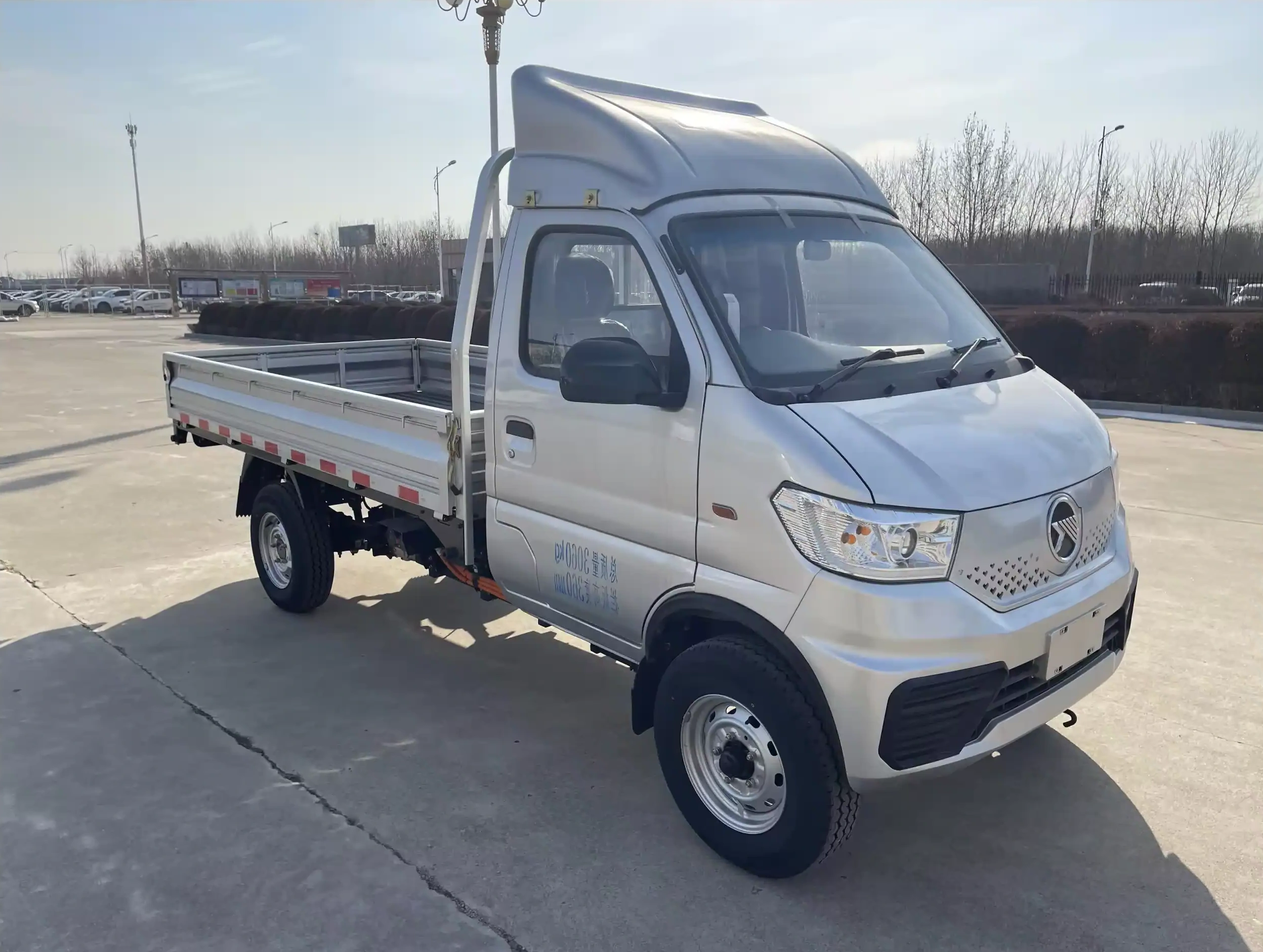
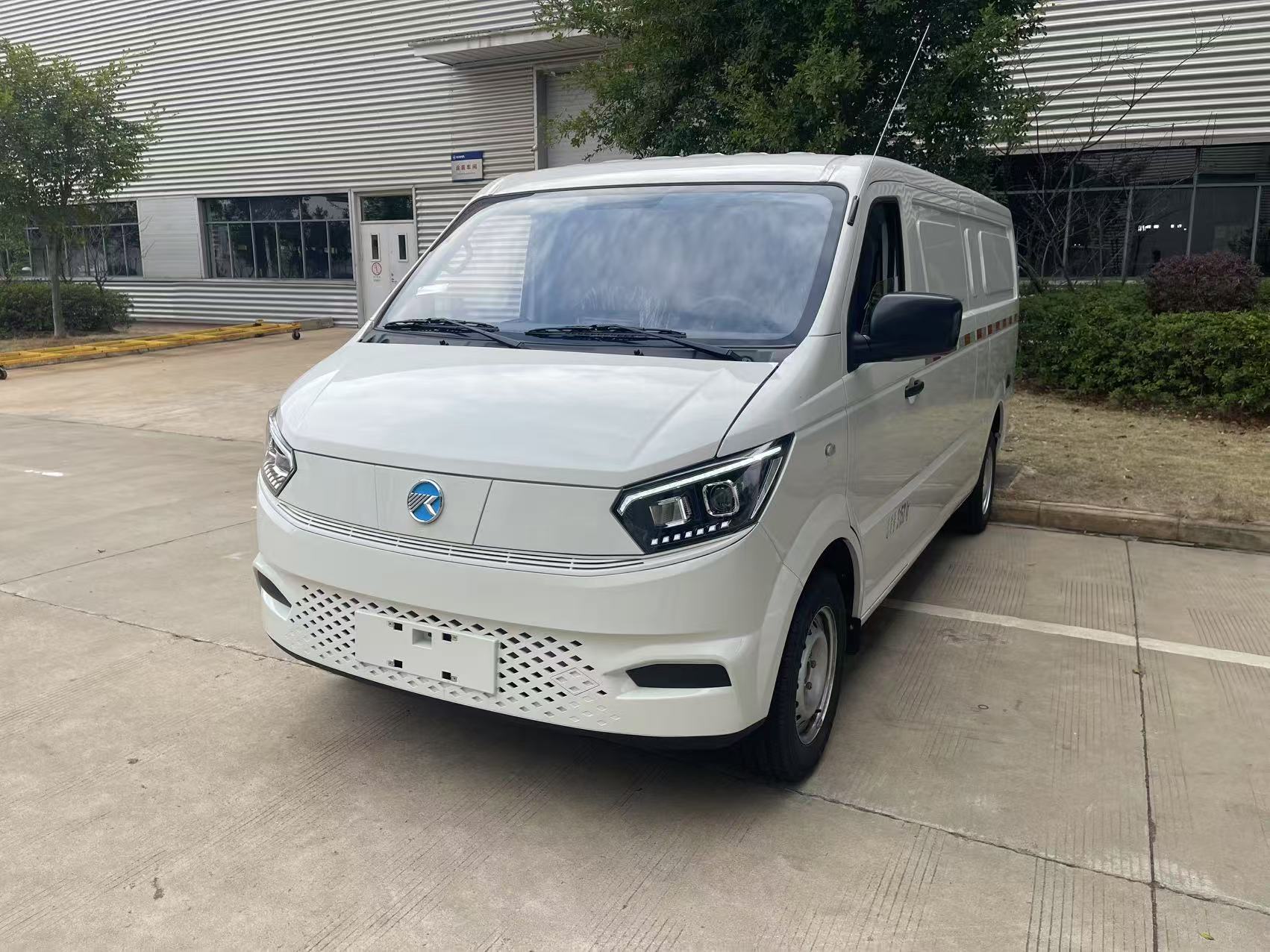
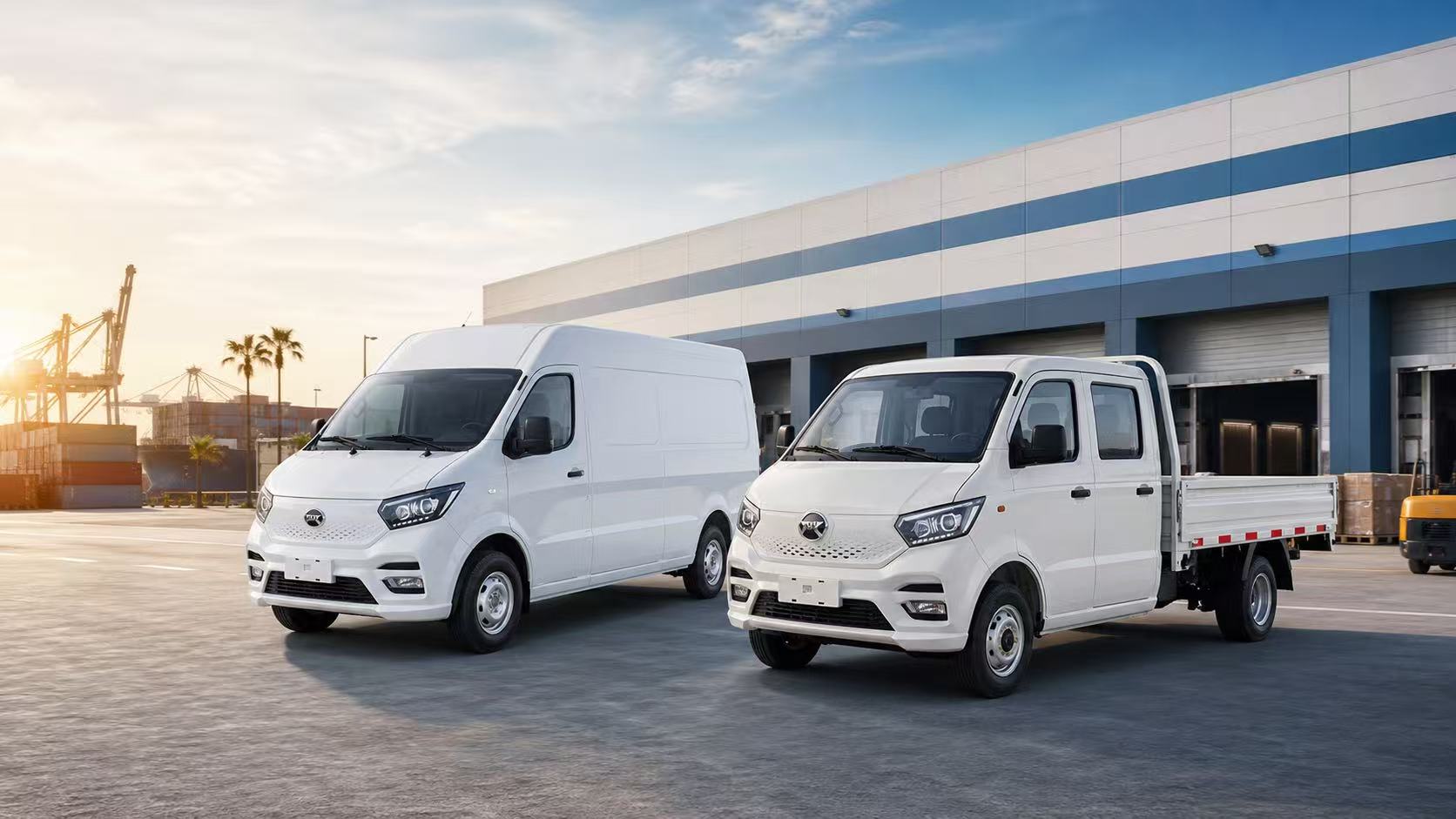
KAMA supplies commercial vehicle solutions for overseas distributors, importers and fleet buyers.
Potential product categories for market evaluation include:
Mini trucks
Light trucks
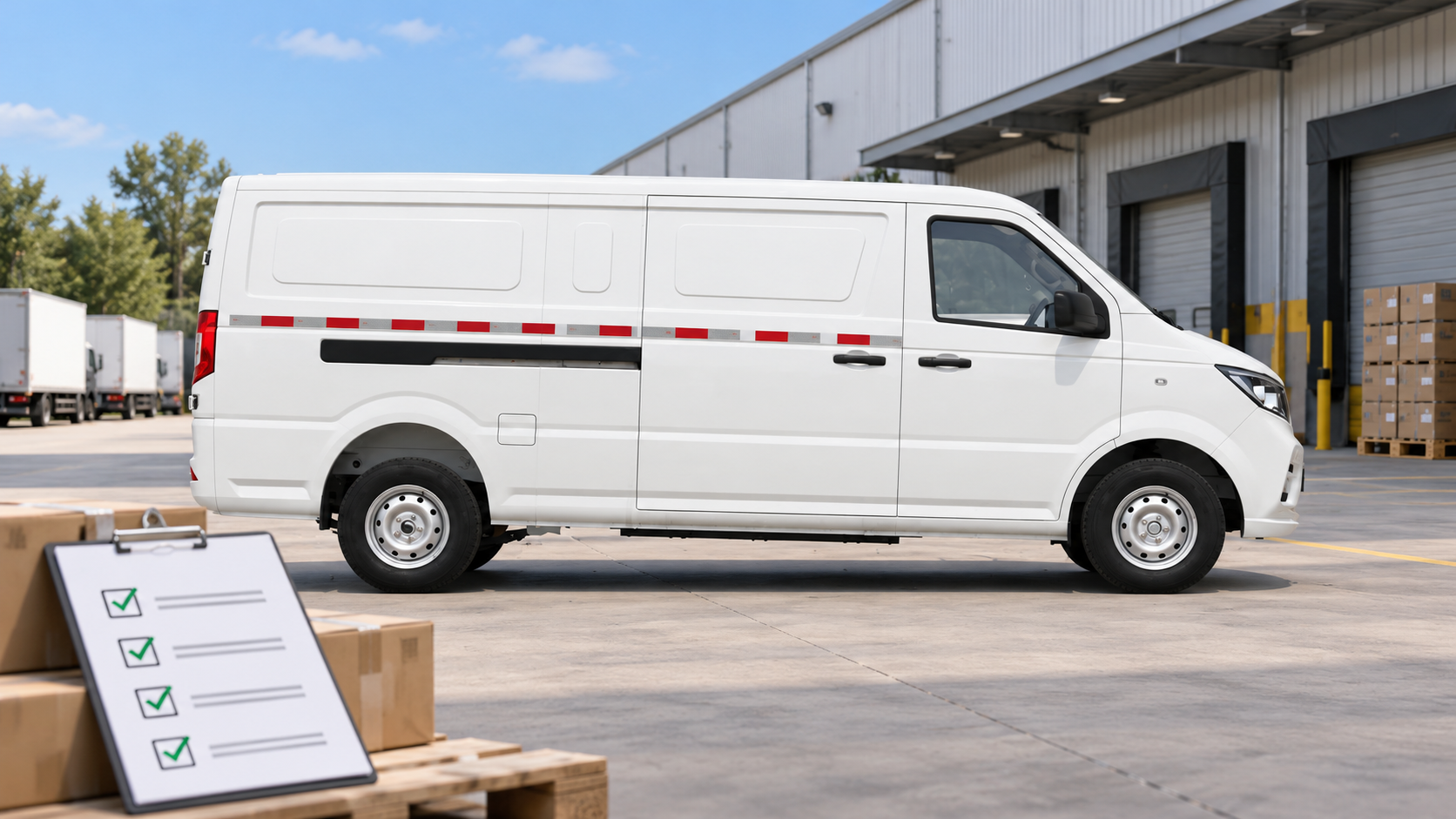
Cargo vans
Passenger vans and minibuses
Electric mini trucks
Electric light trucks
CNG commercial vehicles
Chassis vehicles
Special-purpose vehicle solutions
For suitable long-term projects, SKD or CKD cooperation can also be discussed.
However, the correct product and cooperation model depend on:
Destination market
Exact vehicle type
Quantity
Local regulation
Certification
Import structure
Fleet application
Distributor capability
Final configuration, certification feasibility and cooperation terms require confirmation for the specific project.
20. Nigeria Is a Market for Long-Term Automotive Partnerships
Nigeria's commercial vehicle opportunity should not be viewed only as a short-term vehicle export business.
The more valuable long-term model may involve:
Spare-parts and service development
↓
Local assembly and localization
That progression is much closer to the direction of Nigeria's automotive industrial policy than simply importing individual vehicles indefinitely.
For serious distributors, the key question is therefore not:
“What is the cheapest truck I can import?”
It is:
“What vehicle platform and cooperation structure can support a sustainable commercial vehicle business in Nigeria?”
Planning to Import Commercial Vehicles into Nigeria?
To evaluate a project, please provide:
FAQ
What documents are commonly involved when importing vehicles into Nigeria?
The import process can involve Form M, applicable regulatory certificates, Commercial Invoice, Packing List, Bill of Lading, Certificate of Origin and PAAR. The exact documents depend on the vehicle and import arrangement. Nigeria Customs lists regulatory certificates and Proforma Invoice among Form M requirements and shipping/commercial documents among PAAR requirements.
What changed in Nigeria's import process in 2026?
From March 27, 2026, SON moved specified SONCAP and Import Permit processes into Nigeria's National Single Window framework, including activation used for Form M, PAAR and cargo-clearance workflows.
Does every vehicle simply need SONCAP?
Vehicle compliance should not be simplified that way. SON operates SONCAP for regulated imports but also identifies a SON–NADDC Vehicle Conformity Assessment Programme (VehCAP) specifically for vehicles. The exact conformity route should be confirmed for the relevant vehicle.
Should a Nigerian distributor start with CBU or CKD?
For new market entry, CBU is normally easier to evaluate because investment and operational complexity are lower. SKD or CKD may become more relevant when annual sales, assembly capability and regulatory conditions justify local production.
Can Nigeria support CNG commercial vehicles?
Nigeria is actively developing its CNG automotive ecosystem, and NADDC currently publishes accredited CNG conversion workshops. Whether a CNG vehicle is suitable still depends on local refueling infrastructure and fleet operating conditions.
Are electric commercial vehicles suitable for Nigeria?
They may be suitable for predictable urban or return-to-base operations where daily mileage, charging and payload can be controlled. Fleet buyers should evaluate the operating route before selecting battery capacity.