Welcome to KAMA Auto
KAMA EV1 Electric Mini Truck: Smart 2026 Fleet Choice
China is exporting electric vehicles faster than at any point in history. In April 2026 alone, Chinese EV exports jumped around 40% year on year to 278,081 units, lifting the year-to-date total to 893,852. Demand in the Global South is climbing even faster, with year-on-year growth of roughly 130% in Southeast Asia, 60% in the Middle East and 55% in Latin America. For distributors and fleet operators across these regions, the question is no longer whether to electrify — it's which vehicle makes commercial sense today.
For most light-commercial buyers, the answer isn't a passenger EV. It's a compact, hard-working electric truck. That's exactly where the KAMA EV1 electric mini truck fits.
A workhorse built for real operating conditions
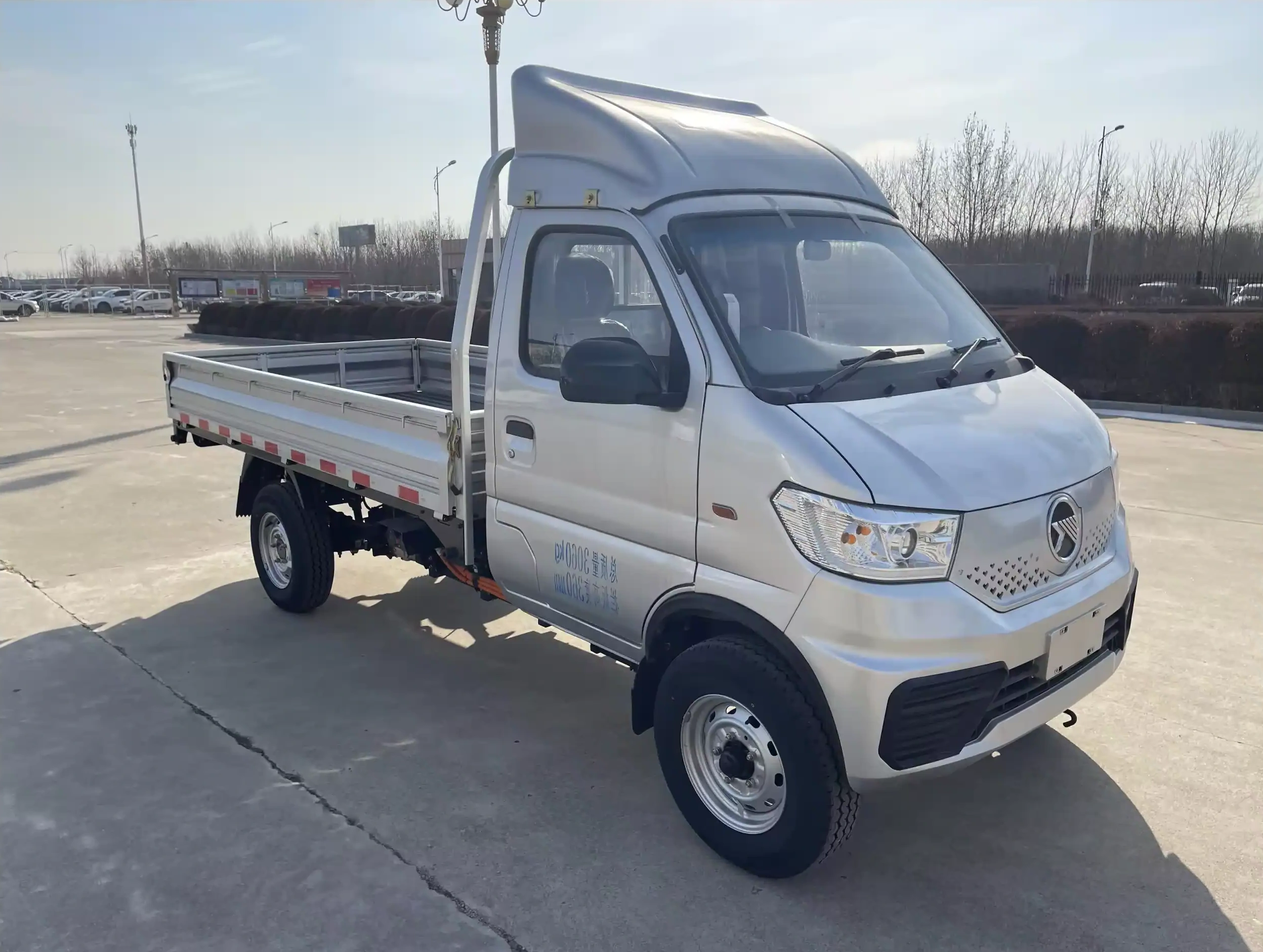
The KAMA EV1 is a pure-electric single-cab light truck engineered for daily business use, not showroom appeal. It carries a 1.5-tonne payload and is powered by a 41.9 kWh GOTION lithium iron phosphate (LFP) battery — a chemistry chosen for its safety, long cycle life and tolerance of hot climates. The standard pack delivers up to 260 km of range (WLTP), and an optional battery upgrade extends that to roughly 510 km on a single charge, enough for a full day of routes between charges.
A 35 kW (70 kW peak) motor gives smooth, quiet pulling power for stop-start city work, with a 90 km/h top speed for inter-town runs. Both fast and slow charging (GB/T) are supported as standard, with an optional CCS2 plug available for markets that need it.
Because it's electric, the EV1 removes the two costs that quietly erode commercial margins: fuel and maintenance. There's no engine oil, no timing belt and no exhaust system — and far fewer moving parts to fail in dusty, high-heat or stop-start duty cycles.
Key specifications at a glance
Payload: 1.5 tonnes — single cabin
Battery: 41.9 kWh GOTION LFP (upgrade available)
Range: up to 260 km WLTP, or ~510 km with the upgraded pack
Motor: 35 kW rated / 70 kW peak
Top speed: 90 km/h
Wheelbase: 3,050 mm — overall 4,960 × 1,780 × 2,055 mm
Cargo bed: 3,050 × 1,690 mm, with an optional enclosed metal/PVC box body
Charging: GB/T fast & slow charging standard; CCS2 optional
Built-in: ABS, power steering, A/C, power windows, central locking, MP5 media
Warranty: 5 years / 200,000 km on motor, battery and controller; 2 years / 40,000 km whole vehicle
Export-ready: LHD standard, RHD optional, English-language displays, 3 units per 40HQ container
Where the EV1 earns its keep
Sized for the work that actually drives revenue in emerging markets, the EV1 suits:
Last-mile and parcel delivery — narrow streets, frequent stops, predictable daily range
Retail, food and beverage distribution — supplying shops, restaurants and markets on fixed routes
Trades and field service — carrying tools, materials and equipment to job sites
Agriculture and rural transport — moving produce, feed and goods over short hauls
Municipal and project fleets — clean, quiet operation for city services and low-emission zones
This is also why the EV1 fits the markets leading the 2026 surge. In much of Africa, new Chinese EVs are now landing at prices close to used petrol vehicles — which changes the buying maths for any operator nursing an aging second-hand fleet. A new electric truck with a five-year drivetrain warranty and far lower running costs starts to look like the cheaper option over its working life, not the expensive one.
Why timing favours buyers who move now
The export boom is creating two openings worth acting on. First, scale: Chinese EV exports hit a record 2.5 million units in 2025, double the previous year, and outside Europe and the US, Chinese models made up about 55% of EV sales. That volume means mature supply chains, parts availability and dependable lead times — the EV1 ships from a minimum order of one unit, with production typically inside 50 days.
Second, structure. With several markets adjusting import duties, KAMA supports SKD assembly partnerships, letting distributors lower tariff exposure, assemble locally and build their own after-sales presence rather than importing fully-built units at full duty. For a serious distributor, that's the difference between reselling trucks and building a local brand.
The KAMA advantage
Behind the EV1 is more than three decades of commercial-vehicle manufacturing and an export network already serving Southeast Asia, the Middle East, Africa and Latin America. Vehicles ship in LHD and RHD, with English-language controls and global video-based technical support — so the hundredth truck keeps running as reliably as the first.
China's EV export wave isn't slowing down, and the operators who win in 2026 are the ones choosing vehicles built for their actual routes, climates and margins. The KAMA EV1 electric mini truck is built for exactly that.
Ready to put the EV1 to work in your market? Request a full specification sheet and quote at kamaauto.cn — and ask about RHD availability, battery upgrades and SKD options for your country.