Welcome to KAMA Auto
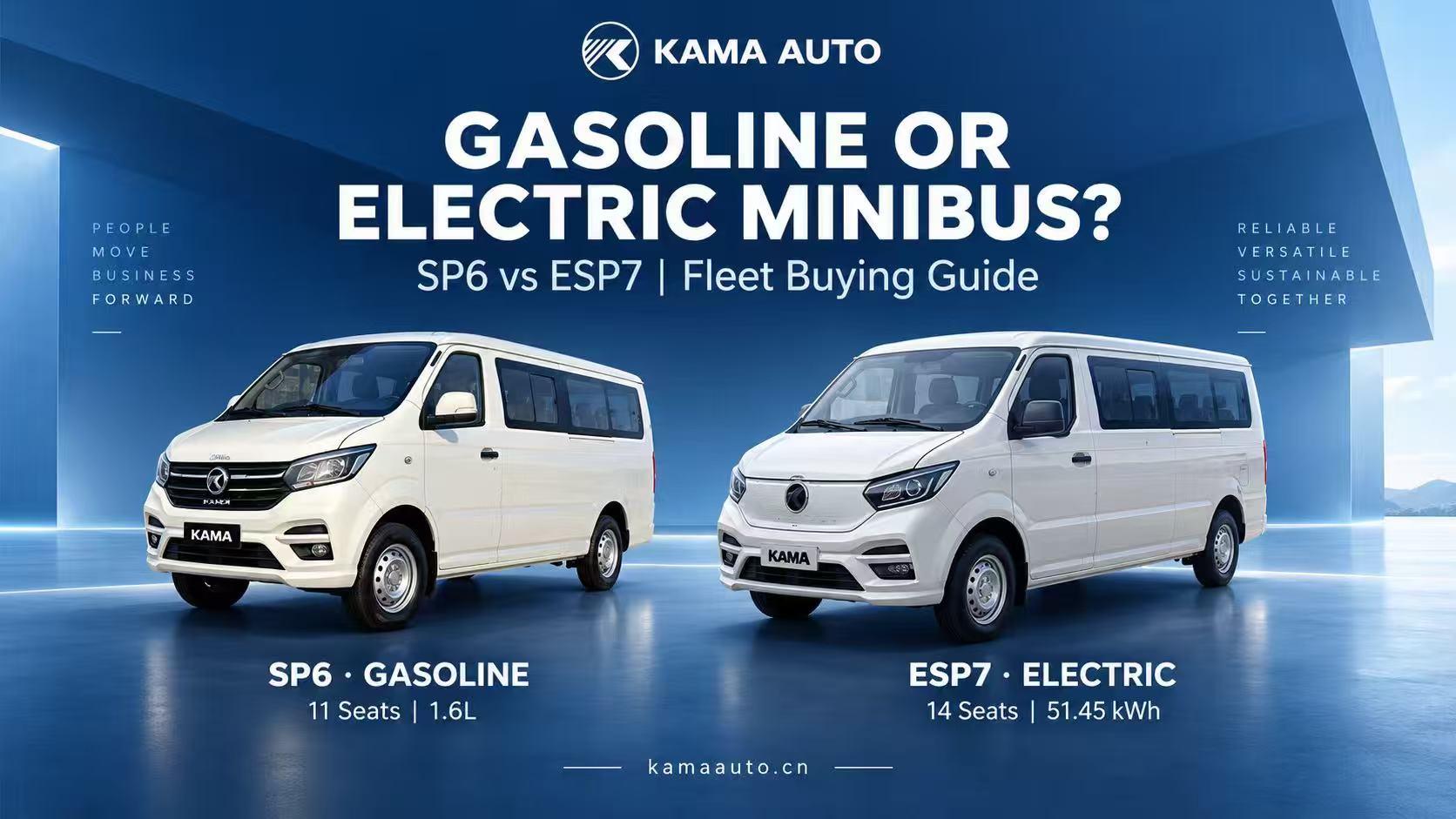
Gasoline or Electric Minibus? KAMA SP6 vs ESP7 for Fleet Buyers
Gasoline or Electric Minibus? KAMA SP6 vs ESP7 for Fleet Buyers
Choosing between a gasoline minibus and an electric minibus starts with the passenger service you need to operate.
How many people must travel at the same time? How far does the vehicle run each day? Can it return to a charger between shifts? Will it carry airport luggage, or mainly commuters with small bags?
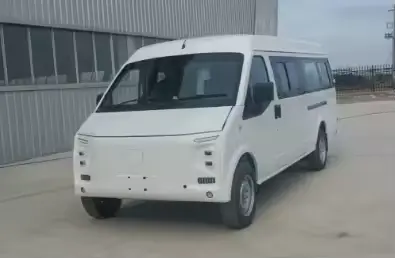
For fleet buyers comparing KAMA vehicles, the SP6 and ESP7 offer two options to evaluate. The SP6 configuration discussed here is an 11-seat gasoline minibus. The ESP7 is a 14-seat electric minibus equipped with a 51.45 kWh Gotion battery.
These vehicles differ in seating, body size and powertrain. A useful comparison should therefore measure how each would complete the same transport task, rather than looking at purchase price or energy cost alone.
KAMA SP6 vs ESP7: Key Configuration Differences
The following comparison uses the published SP6 gasoline specification and the ESP7 Gotion 51.45 kWh specification.
| Item | KAMA SP6 | KAMA ESP7 |
|---|---|---|
| Powertrain | Gasoline | Battery electric |
| Seating layout listed | 11 seats | 14 seats, arranged 2+3+3+3+3 |
| Engine or battery | 1.6L gasoline engine | 51.45 kWh Gotion LFP battery |
| Overall dimensions | 4,860 × 1,715 × 1,995 mm | 5,265 × 1,715 × 2,065 mm |
| Wheelbase | 3,050 mm | 3,450 mm |
| Steering configuration compared | Left-hand drive | Left-hand drive |
| Energy replenishment | Gasoline refuelling | Fast and slow charging; GB standard listed |
| Front air conditioning | Listed | Listed |
| Rear air conditioning | Optional | Optional |
The KAMA SP6 product page provides further information about the gasoline version. For the ESP7, request the specification sheet matching the battery and seating configuration being quoted.
Seat counts must be confirmed as total seats, including the driver where applicable. Final specifications and available options depend on the selected version and destination market.
Compare Passenger Capacity Against the Timetable
An 11-seat vehicle and a 14-seat vehicle do not provide identical transport capacity.
For example, consider a staff shuttle that must transport 12 employees together. If the listed seating includes the driver, an 11-seat configuration cannot accommodate the group in one trip. A confirmed 14-seat configuration could accommodate the headcount, subject to occupant weight and luggage limits.
That difference may affect:
The number of journeys required
Driver working hours
Employee arrival times
Daily distance
The number of vehicles needed
However, extra seats only create value when they are needed. If the normal group is smaller, compare the vehicles against actual occupancy rather than assuming the larger vehicle will generate a saving.
For hotel and airport transfers, assess luggage separately. Enough seats do not guarantee enough baggage space.
Before comparing quotations, prepare a seating and luggage requirement for the busiest normal journey.
When the SP6 Gasoline Minibus Is Worth Evaluating
The SP6 deserves consideration when its seating capacity matches the task and the operator has dependable access to gasoline.
A fleet with changing routes, occasional unscheduled trips or limited parking time may find refuelling easier to incorporate into its working day than a new charging arrangement.
Existing service capability also matters. If the operator already maintains gasoline vehicles, ask whether its workshop can support the exact SP6 engine and transmission, and what additional parts or training would be required.
Evaluate the SP6 against practical questions:
Can its seating layout carry the required group?
Is gasoline consistently available along the operating routes?
What is the measured fuel consumption under representative loading?
Can the local workshop maintain this specific version?
Does the vehicle meet the destination’s requirements?
Fuel access should be assessed locally. A gasoline vehicle’s operational flexibility still depends on the availability and reliability of its fuel supply.
When the ESP7 Electric Minibus Is Worth Evaluating
The ESP7 is worth assessing when the operator needs its seating capacity and can plan charging around the timetable.
A staff shuttle with morning and evening services may have a charging opportunity between shifts. A hotel shuttle returning to the same base may also provide a manageable starting point, depending on transfer frequency and parking time.
For the 51.45 kWh version, the specification lists 310 km CLTC range. This is a test-cycle figure, not a guarantee of loaded service range. Buyers should evaluate the actual timetable with representative passengers, luggage and air-conditioning use.
The key question is:
Can the vehicle complete its assigned work, retain an agreed battery reserve and recharge before its next departure?
The ESP7 specification also lists an optional additional 38.4 kWh of battery capacity, bringing combined nominal capacity to 89.85 kWh. This option requires confirmation of the completed vehicle’s weight, seating and charging characteristics. It should be considered only where the operating requirement justifies it.
Check Refuelling and Charging as Part of the Working Day
Energy replenishment affects vehicle availability.
For the SP6, record travel to the filling station, waiting time and the period when the vehicle is unavailable for passenger service.
For the ESP7, confirm the charging connector, supported power, site electrical capacity and available charging window. A charger’s advertised output does not by itself establish how quickly the selected vehicle will charge.
A simple timetable review can reveal whether either option creates an operational gap:
| Timetable question | What to establish |
|---|---|
| When does the first service begin? | Required vehicle readiness time |
| Is there a break between shifts? | Whether refuelling or charging can occur without interrupting service |
| Does the vehicle return to the same base? | Whether depot charging is practical |
| Are additional trips common? | The reserve needed for schedule changes |
| What happens if the usual energy supply is unavailable? | The alternative operating arrangement |
For electric vehicles, distinguish total battery capacity from the energy that must be replenished each day. Charging planning should reflect actual consumption and the available parking time.
Compare Cost per Completed Passenger Trip
A lower vehicle price does not automatically produce a lower cost for the transport contract.
Build the comparison around the same passenger demand, timetable and ownership period. Include:
Vehicle purchase and delivery
Applicable import and registration expenses
Financing and insurance
Fuel or electricity
Charging installation where required
Maintenance and tyres
Driver time
Vehicle downtime and backup transport
Use actual energy prices and representative consumption measurements. Avoid applying a single fuel-saving percentage to every fleet.
For a route of consistent length, a useful measure is:
Cost per passenger journey = total operating cost for the period ÷ passenger journeys completed
A passenger travelling to work and returning later counts as two passenger journeys. Compare the same service pattern for both vehicles.
This approach makes occupancy and extra trips visible. If one vehicle requires additional journeys to transport the same group, include the resulting time, distance and energy use.
For services covering different distances, cost per passenger-kilometre can provide another useful comparison.
Confirm Passenger Comfort and Service Support
A fleet vehicle must work for passengers, drivers and maintenance staff.
Arrange a practical review of entry and exit, seat access, luggage storage, visibility and air conditioning. Where rear air conditioning is required, specify it in the quotation rather than assuming it is included.
Prepare the service plan before delivery.
For the SP6, confirm maintenance schedules, relevant service parts and workshop familiarity with the selected powertrain.
For the ESP7, confirm available diagnostics, technician training, battery and charging support, and procedures for working on the electrical system.
Both vehicles also require support for tyres, brakes, suspension, doors and passenger equipment. Agree on the initial parts package, technical documentation and warranty claim process for the exact order.
Run a Representative Vehicle Evaluation
Before committing to a fleet, evaluate the shortlisted configuration against clear acceptance criteria.
Use the intended route and realistic passenger loading. Include luggage and the air-conditioning settings expected during normal operation.
Record:
Whether all required passengers and luggage can be accommodated.
Whether the timetable is completed.
Fuel or electricity consumed.
Refuelling or charging time.
Driver and passenger feedback.
Any service issues and the response needed.
For the ESP7, also record departure and arrival battery state of charge. For both vehicles, include empty positioning journeys in the daily distance.
A successful demonstration should lead to a written production specification covering the agreed seating, powertrain, equipment and support package.
Which Minibus Should Your Fleet Choose?
Start with the SP6 when the confirmed 11-seat layout fits the work, gasoline access is dependable and the operating schedule favours refuelling flexibility.
Evaluate the ESP7 when its 14-seat arrangement matches passenger demand and the route, battery reserve and charging schedule can be verified together.
A mixed fleet may also be appropriate when different routes have different requirements. The decision should follow the transport tasks and operating evidence.
Request a KAMA Minibus Comparison for Your Project
To receive a relevant SP6 or ESP7 proposal, send KAMA:
Destination country and operating city
Number of passengers, excluding the driver
Luggage requirements
Daily distance and timetable
Road conditions
Gasoline availability and charging conditions
Air-conditioning requirements
First-order quantity and intended fleet size
KAMA can use this information to review the suitable configuration and prepare a quotation. Model availability and supply arrangements are subject to destination-market confirmation.
Contact KAMA Auto to compare the SP6 gasoline minibus and ESP7 electric minibus for your passenger transport project.