Welcome to KAMA Auto
How KAMA Electric Refrigerated Vans Support Cold Chain Delivery in Hot-Climate Markets
Why Cold Chain Demand Is Rising Faster in Hot-Climate Markets
Cold chain transport is no longer a topic limited to Europe or North America. Across the Middle East, North Africa, Sub-Saharan Africa, South Asia and Latin America, buyers are dealing with a combination of factors that push refrigerated delivery higher on the priority list — rising urban populations, expanding modern retail, growing pharmaceutical distribution networks, and stricter food safety expectations from both regulators and consumers. In these regions, ambient temperatures often sit above 35 °C for long parts of the year, which means any break in the cold chain leads directly to spoilage, returns and reputational damage.
For fleet operators and distributors evaluating new vehicles, the practical question is not whether cold chain logistics will grow, but which vehicle category fits daily operating reality. A left-hand drive electric refrigerated van in the 1–2 ton class is becoming one of the most relevant choices for urban and peri-urban distribution.
The Hot-Climate Challenge for Refrigerated Delivery
A refrigerated van in a hot-climate market has to manage three pressures at the same time: keeping cargo at the target temperature, dealing with frequent door openings during multi-drop delivery, and surviving long hours of solar exposure. Diesel refrigerated vans handle this by running the engine to power the compressor, which means fuel burn does not stop when the vehicle is parked at a drop point. As diesel prices stay volatile and many cities tighten emission rules near residential, hospital and food-service zones, this model is becoming less practical.
An electric refrigerated van separates traction power from refrigeration power. The compressor can run on battery during loading and at delivery stops without idling an engine, and the vehicle produces no tailpipe emissions in dense urban areas where deliveries actually take place. For operators delivering to clinics, schools, supermarkets and central kitchens, this is a real operational advantage, not just an environmental claim.
Why Electric Refrigerated Vans Are Gaining Share in Emerging Markets
Three shifts are driving the move from diesel to electric refrigerated vans in export markets:
Fuel cost pressure — diesel and gasoline price spikes through 2025 and early 2026 have lifted per-kilometre operating costs for traditional refrigerated vans, making electric alternatives more competitive on total cost of ownership.
Urban access rules — cities in the Gulf, North Africa and Latin America are rolling out low-emission zones, time-of-day restrictions, and noise limits in residential delivery areas. Electric refrigerated vans operate inside these zones without restriction.
Local assembly opportunity — many emerging markets now offer reduced import duty for CKD or SKD kits, which lowers the landed cost of an electric commercial vehicle and improves the payback period for fleet conversion.
These shifts are not theoretical. They are reflected in tender language from logistics operators, government healthcare procurement and corporate sustainability commitments.
What KAMA Offers for Hot-Climate Cold Chain Operations
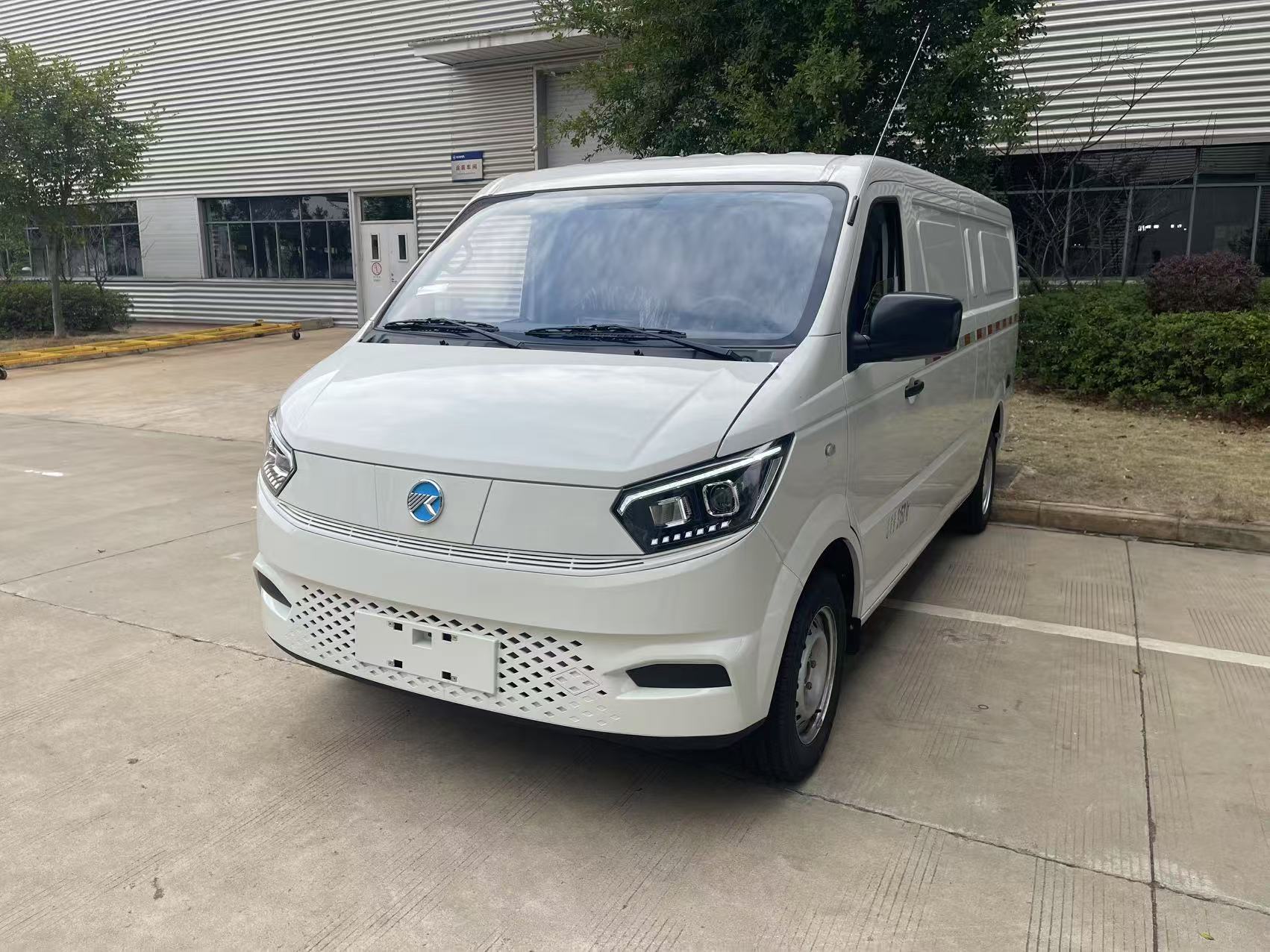
KAMA produces electric refrigerated vans in the 1–2 ton payload range, built on a left-hand drive platform suitable for most export markets in Africa, the Middle East, Latin America and Central Asia. The configuration is designed around the actual workload of urban cold chain delivery rather than long-haul refrigerated trucking.
Key design priorities for hot-climate use include:
Insulated cargo body with polyurethane foam walls to reduce heat ingress during repeated door openings
Independent refrigeration unit powered by the vehicle's electrical system, with temperature settings adjustable for chilled (0 to 8 °C) or frozen (−18 °C) cargo
Battery system suited to daily route lengths common in urban distribution — typically 150–250 km per shift with cooling load
Reinforced suspension for mixed-quality road surfaces in secondary cities and outer logistics corridors
Driver cabin air-conditioning sized for sustained high ambient temperatures
The vehicle is positioned for distributors and fleet customers who need a practical electric option, not a passenger EV adapted to commercial use.
https://apps.who.int/immunization_standards/vaccine_quality/pqs_catalogue/
Use Cases That Match Daily Operations
KAMA's electric refrigerated van fits several distribution scenarios that buyers in hot-climate markets already operate:
Fresh produce and dairy distribution from regional cold stores to supermarkets, hotels and central kitchens
Frozen food and ice cream delivery to retail and HoReCa customers in dense urban zones
Pharmaceutical and vaccine transport from regional warehouses to clinics and hospital pharmacies, where temperature integrity is regulated
Catering and ready-meal distribution for corporate canteens, schools and event services
E-commerce grocery delivery to residential addresses where noise and emissions matter to customers and building managers
Each of these use cases has different temperature, payload and route profile requirements, and KAMA supports buyers with configuration recommendations during the quotation stage rather than offering a single fixed specification.
https://www.fao.org/food-loss-and-food-waste/
What Fleet Buyers Should Check Before Ordering
Before placing an order for any electric refrigerated van, commercial buyers should request clear information on the following points. These are the questions experienced cold chain operators ask, and they matter more than brochure claims:
Confirmed payload after the refrigeration unit and insulation are installed
Realistic range under cooling load, not unloaded range
Battery chemistry and thermal management approach for high ambient temperatures
Charging compatibility with the depot or public infrastructure available in the target country
Compressor type, refrigerant used, and serviceability of spare parts locally
Warranty coverage on the vehicle and the refrigeration unit separately
Availability of after-sales support and spare parts in the destination market
KAMA encourages buyers to share their real route data — daily distance, number of stops, ambient temperature, target cargo temperature — so the technical recommendation matches the operation rather than a generic profile.
Looking Ahead
Cold chain logistics in hot-climate markets will continue to expand, driven by retail modernisation, healthcare distribution requirements and consumer demand for fresh and frozen products. Electric refrigerated vans in the 1–2 ton class are positioned to take a meaningful share of this growth, especially for urban and peri-urban routes where operating economics and urban access rules favour zero-emission vehicles.
For distributors, importers and fleet buyers planning their next refrigerated vehicle purchase, KAMA offers a left-hand drive electric refrigerated van solution with export-ready configuration, technical support during specification, and CKD/SKD options for markets pursuing local assembly. Contact the KAMA team for a quotation, model recommendation and route-based configuration suited to your market.