Welcome to KAMA Auto
Fleet Electrification Plan: How to Run a 5–20 Vehicle Commercial EV Pilot
Fleet Electrification Plan: How to Run a 5–20 Vehicle Commercial EV Pilot
Commercial vehicle electrification is moving from small demonstrations to practical fleet deployment. According to the International Energy Agency, global sales of electric light commercial vehicles exceeded 430,000 units in 2025, while electric truck sales continued to grow rapidly.
However, replacing an entire commercial fleet at once can create unnecessary operational and financial risks. Vehicle range, payload, charging conditions, route characteristics and driver behavior can all affect actual performance.
For many distributors, logistics companies and fleet operators, the most practical first step is therefore a controlled electric vehicle pilot involving approximately 5 to 20 vehicles.
A well-designed pilot can help the buyer verify whether electric commercial vehicles are suitable for local routes before placing a larger order.
Why Fleet Electrification Should Start with a Pilot
A commercial EV pilot is not simply a short vehicle test. It is a structured operating project designed to answer several important questions:
Can the vehicle complete the required daily routes?
How does payload affect driving range?
Can the available charging infrastructure support daily operation?
How much energy does each route consume?
Are drivers comfortable operating and charging the vehicle?
What technical support and spare parts are required?
Which vehicle configuration should be selected for future fleet expansion?
The objective is to collect measurable operating data and reduce uncertainty before scaling the fleet.
A pilot is particularly valuable in emerging markets, where road conditions, electricity supply, ambient temperature, charging standards and after-sales resources may differ significantly between regions.
Step 1: Establish the Current Fleet Baseline
Before selecting an electric vehicle, the operator should understand how the existing fleet works.
The following information should be collected for each route or vehicle group:
Vehicle type
Rated payload
Typical daily payload
Daily driving distance
Maximum single-trip distance
Number of daily trips
Average road speed
Idling time
Fuel consumption
Fuel and maintenance costs
Loading and unloading time
Parking location
Available charging time
This baseline provides the reference point for evaluating the electric fleet pilot.
For example, a vehicle that travels 80 kilometers per day on a fixed urban route may have very different requirements from a vehicle that travels 250 kilometers between cities.
The correct electric vehicle should be selected according to the actual operating cycle—not only according to the advertised driving range.
Step 2: Select Suitable Pilot Routes
Not every route should be electrified at the same time. The first pilot should focus on routes with predictable operating conditions.
Suitable pilot routes usually have:
Stable daily mileage
Regular parking locations
Sufficient overnight charging time
Moderate payload variation
Limited unexpected route changes
Access to reliable electricity
Easy vehicle monitoring
Urban delivery, industrial park logistics, municipal service, hotel transport, airport shuttle and fixed commuter routes are often suitable starting points.
Long-distance routes with uncertain mileage, extremely heavy loads or limited charging access may require additional analysis before electrification.
The purpose of route selection is not to choose the easiest possible test. It is to choose a representative route that can produce useful data without creating unacceptable operational risk.
Step 3: Match the Vehicle to the Commercial Application
Commercial EV selection should begin with the business application.
Different vehicle types are designed for different operating roles.
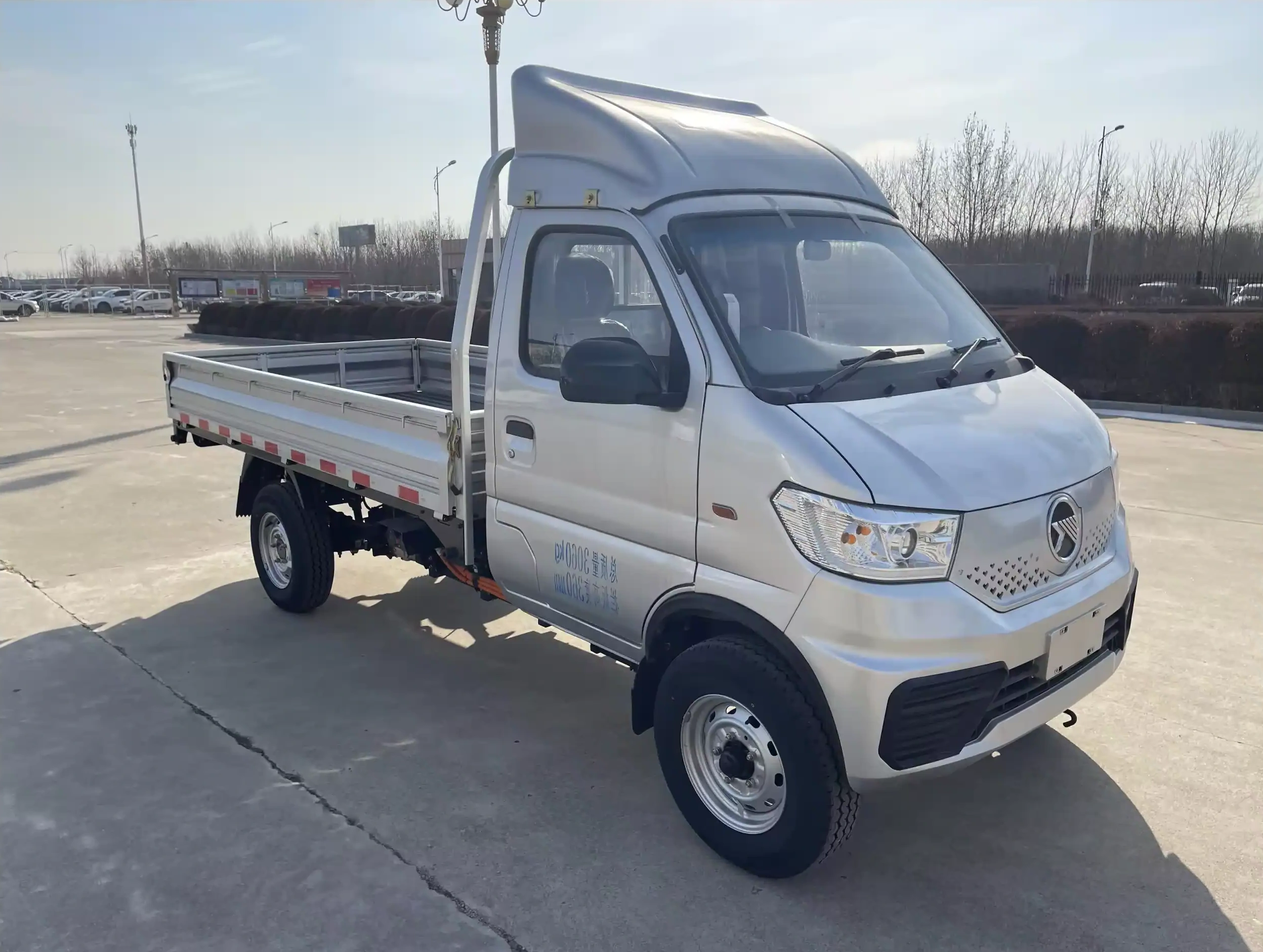
Electric Mini Trucks
Electric mini trucks may be suitable for:
Last-mile delivery
Local retail distribution
Agricultural product transport
Community logistics
Light construction support
Urban service operations
Their compact dimensions can be useful in narrow streets, crowded markets and short-distance distribution routes.
Electric Light Trucks
Electric light trucks may be suitable for:
Urban and regional logistics
Industrial material transport
Supermarket distribution
Furniture and appliance delivery
Municipal applications
Customized cargo-body projects
The buyer should evaluate gross vehicle weight, payload, cargo-body dimensions, motor output and battery capacity together.
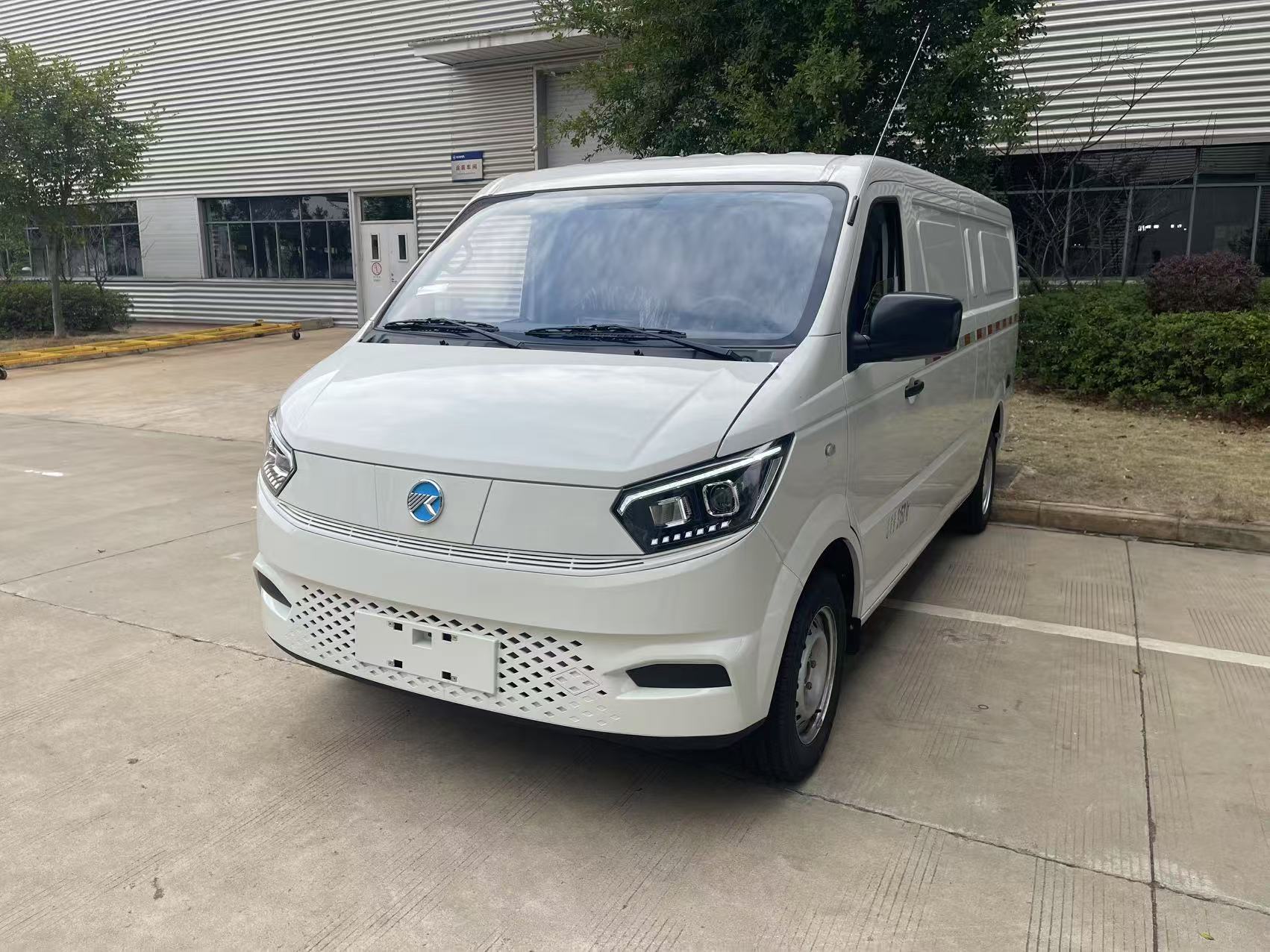
Electric Cargo Vans
Electric cargo vans may be considered for:
Parcel delivery
E-commerce logistics
Pharmaceutical distribution
Service fleets
Mobile workshop applications
Temperature-controlled transport
Cargo volume, rear-door design, side-door access and internal cargo configuration can be as important as payload.
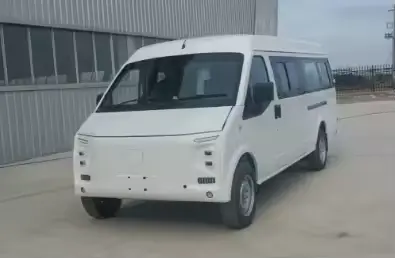
Electric Passenger Vans and Minibuses
Electric passenger vehicles may be used for:
Employee transport
Hotel shuttle services
Airport transfer
Tourist transportation
School or institutional transport
Fixed-route public services
Passenger capacity, seating layout, air-conditioning load and local certification requirements should be confirmed before ordering.
Step 4: Calculate Usable Driving Range
The published driving range of an electric commercial vehicle is normally measured under a defined test cycle. Actual range can vary according to operating conditions.
Important factors include:
Payload
Average speed
Road gradient
Traffic congestion
Frequent acceleration and braking
Air-conditioning use
Ambient temperature
Tire pressure
Driver behavior
Battery condition
For fleet planning, the operator should not schedule daily routes equal to the maximum stated range.
A practical calculation should include an operational reserve for unexpected detours, traffic delays, temperature changes and battery aging.
For example, if a route requires 160 kilometers per day, the selected configuration should provide sufficient usable range beyond that distance under realistic payload conditions.
During the pilot, record the battery state of charge at departure and return. This will help determine the actual energy consumption per kilometer and the available operating reserve.
Step 5: Verify Payload and Body Requirements
Driving range should never be evaluated separately from payload.
A vehicle may complete a route when empty but consume significantly more energy when carrying its normal commercial load. The pilot should therefore include:
Empty vehicle tests
Partial-load tests
Normal operating-load tests
Maximum expected-load tests where permitted
The operator should also confirm the required body type.
Possible configurations may include:
Cargo van
Flatbed
Dropside cargo body
Box body
Refrigerated body
Service body
Customized cargo body
Any modification must comply with the permitted chassis load, axle distribution and destination-market regulations.
Step 6: Design the Charging System Around the Route
Charging infrastructure is part of the fleet system. It should be planned together with the vehicles.
The operator should determine:
Charging standard required in the destination country
Available grid voltage and frequency
Maximum site power capacity
Number of chargers
Charging power
Overnight parking time
Vehicle departure schedule
Cable length and parking layout
Protection against rain, dust or unauthorized use
Backup plan in case a charger is unavailable
For vehicles returning to the same depot each evening, overnight charging may be sufficient. Fleets operating multiple shifts may require faster charging or a staggered charging schedule.
Selected KAMA electric commercial vehicle configurations may support different charging solutions, subject to the vehicle model, destination market and final technical confirmation.
Before production, the connector type and charging protocol should be confirmed in writing.
Step 7: Confirm Import and Registration Requirements
A vehicle that performs well technically must also meet local legal requirements.
Before ordering a pilot fleet, the importer should verify:
Vehicle import eligibility
Steering position
Applicable emission or electric vehicle rules
Vehicle category
Homologation requirements
VIN format
Manufacturer documentation
Safety requirements
Lighting standards
Charging connector regulations
Axle-load limits
Registration procedures
Requirements differ between countries. A specification suitable for one market may not automatically be suitable for another.
The buyer should provide the destination country, port and intended application during the early quotation stage. This allows the manufacturer to evaluate configuration feasibility more accurately.
Step 8: Prepare Drivers and Technicians
Driver behavior can have a measurable effect on electric vehicle range and energy consumption.
Pilot drivers should receive basic training covering:
Vehicle start-up and shutdown
Charging procedures
Dashboard warnings
Regenerative braking
Efficient acceleration
Safe battery use
Daily inspection
Emergency procedures
Reporting abnormal conditions
Technicians should also understand the separation between conventional mechanical maintenance and high-voltage system work.
Only appropriately trained personnel should inspect or repair high-voltage components.
Step 9: Prepare Spare Parts and Technical Support
A commercial fleet cannot depend only on vehicle availability. It also requires a support plan.
Before the pilot begins, confirm:
Recommended spare parts list
Consumable parts
Regular maintenance items
Diagnostic equipment
Technical manuals
Warranty conditions
Remote troubleshooting process
Technician training options
Parts delivery method
Responsible contact persons
For a small pilot fleet, frequently used service parts can be ordered together with the vehicles. This reduces downtime and helps the local service team become familiar with the product.
Spare-parts scope and training arrangements should be confirmed according to the model, order quantity and destination market.
Why 5–20 Vehicles Is a Practical Pilot Quantity
A single demonstration vehicle can confirm basic functionality, but it may not provide enough information for a fleet decision.
A pilot of approximately 5 to 20 vehicles allows the operator to compare:
Different routes
Different drivers
Different payloads
Different charging times
Vehicle availability
Energy consumption
Maintenance requirements
The exact quantity should depend on the size of the existing fleet and the number of representative operating conditions.
Five vehicles may be sufficient for a small local delivery operation. A larger organization may require 10 to 20 vehicles to test multiple depots, routes or departments.
Recommended Pilot Duration
A commercial EV pilot should normally run long enough to include different operating conditions.
A 60-to-90-day period can provide more reliable information than a short demonstration.
The pilot should include:
Normal working days
Peak delivery periods
Different weather conditions where possible
Full and partial loads
Multiple drivers
Regular charging cycles
At least one planned inspection
Very short tests may produce misleading conclusions because they do not capture route variation, maintenance needs or driver adaptation.
Key Performance Indicators for an Electric Fleet Pilot
The following indicators should be recorded:
| Indicator | Purpose |
|---|---|
| Daily driving distance | Confirms route coverage |
| Energy consumption per kilometer | Measures operating efficiency |
| Battery state of charge at return | Measures operating reserve |
| Payload | Connects energy use with real work |
| Charging time | Evaluates vehicle availability |
| Electricity consumption | Supports cost analysis |
| Vehicle availability | Measures operational reliability |
| Unplanned downtime | Identifies support requirements |
| Maintenance events | Tracks service demand |
| Driver feedback | Identifies training and usability issues |
| Route completion rate | Measures operational suitability |
The operator should compare these results with the original fleet baseline.
When Is the Pilot Ready to Scale?
Fleet expansion should be considered when the pilot demonstrates that:
Vehicles can complete the required routes consistently
Payload requirements are met
Charging fits the daily operating schedule
Electricity supply is reliable
Drivers can operate the vehicles correctly
Maintenance support is available
Spare-parts planning is practical
Vehicle downtime remains acceptable
Operating data supports the business case
Local registration requirements have been satisfied
If one or more conditions are not met, the operator should identify whether the problem can be corrected through route adjustment, driver training, charging upgrades or a different vehicle configuration.
A pilot that identifies a problem is still valuable because it prevents the same issue from affecting a larger fleet.
Common Fleet Electrification Mistakes
Selecting a Vehicle Only by Advertised Range
Range must be evaluated together with payload, road conditions, temperature and charging availability.
Ignoring the Charging Site
Vehicles may arrive before chargers, electrical upgrades or site approvals are ready. Vehicle and infrastructure schedules should be coordinated.
Testing Only One Driver
Different driving styles can produce different energy-consumption results. Several trained drivers should participate.
Using an Unrepresentative Route
A vehicle tested only on a short, empty route may not reflect actual commercial operation.
Ordering Too Many Vehicles Before Validation
A staged procurement strategy reduces technical, operational and financial risk.
Failing to Confirm Local Compliance
Import, homologation and registration requirements should be checked before the purchase contract is finalized.
How KAMA Can Support Commercial EV Pilot Projects
KAMA works with overseas distributors, importers and fleet customers on commercial vehicle projects.
Depending on the selected model and final factory confirmation, available project discussions may include:
Electric mini trucks
Electric light trucks
Electric cargo vans
Electric passenger vans and minibuses
Left-hand-drive or right-hand-drive configurations
Battery and driving-range options
Charging-interface options
Cargo-body customization
Refrigerated transport solutions
Spare-parts packages
Technical documentation
Online technical support
Maintenance training
CBU, SKD or CKD cooperation
Vehicle availability and specifications are subject to the destination market, applicable regulations and final technical confirmation.
Information Required for a Pilot-Fleet Proposal
To prepare a suitable commercial EV proposal, please provide:
Destination country and city
Destination port
Required vehicle type
Intended application
Required quantity
Left-hand drive or right-hand drive
Daily driving distance
Maximum single-trip distance
Typical and maximum payload
Road and gradient conditions
Available charging voltage
Required charging connector
Cargo-body or seating requirements
Local certification requirements
Expected delivery schedule
More complete operating information allows the vehicle and charging configuration to be evaluated more accurately.
Conclusion
Fleet electrification should be treated as an operational transition rather than a simple vehicle purchase.
A structured 5–20 vehicle commercial EV pilot gives importers and fleet operators the opportunity to verify routes, range, payload, charging, driver performance and technical support before expanding the project.
The strongest pilot projects begin with accurate operating data, select representative routes and use measurable performance indicators.
For organizations planning an electric truck, van or minibus project, KAMA can discuss vehicle configurations and pilot-fleet requirements according to the destination market and intended application.
Contact KAMA Overseas Sales:
Email: [email protected]
WhatsApp / WeChat: +86 136 0639 6917
Website: www.kamaauto.com
Frequently Asked Questions
How many vehicles should be included in a commercial EV pilot?
Approximately 5 to 20 vehicles is a practical range for many operators. The final quantity depends on fleet size, route diversity and the number of operating conditions that need to be tested.
How long should an electric fleet pilot run?
A 60-to-90-day pilot can provide useful operating data. Longer testing may be required for seasonal weather, difficult terrain or intensive multi-shift operation.
Should the pilot use fast charging or overnight charging?
The charging method should match the operating schedule. Overnight depot charging may be suitable for single-shift routes, while multi-shift fleets may require faster or staggered charging.
Does payload affect electric vehicle range?
Yes. Payload, road gradient, traffic, temperature, speed and air-conditioning use can all affect energy consumption and actual range.
Can electric commercial vehicles be supplied with right-hand drive?
Right-hand-drive availability depends on the selected model and final factory confirmation. The steering requirement should be stated at the beginning of the project.
Can KAMA provide customized cargo bodies?
Cargo-body options may include flatbeds, dropside bodies, box bodies, refrigerated bodies and other application-specific designs, subject to technical feasibility and legal requirements.
What charging standards are available?
Charging standards and connectors depend on the vehicle model and destination market. The required standard must be confirmed before production.
What information is needed for a quotation?
Please provide the destination country, port, quantity, vehicle application, payload, daily mileage, steering position, charging conditions and required body or seating configuration.