Welcome to KAMA Auto
Electric Mini Truck Manufacturer in China: What Importers Should Check Before Buying
Electric Mini Truck Manufacturer in China: What Importers Should Check Before Buying
Meta Title: Electric Mini Truck Manufacturer in China: Importer Buying Guide 2026
Meta Description: Looking for an electric mini truck manufacturer in China? Learn what importers should check before buying, including payload, range, LHD/RHD, charging, spare parts and CKD/SKD support.
Suggested URL Slug: electric-mini-truck-manufacturer-china-buying-guide
Primary Keyword: electric mini truck manufacturer in China
Secondary Keywords: electric mini truck supplier, EV mini truck, electric cargo truck, 1 ton electric mini truck, LHD electric mini truck, CKD SKD commercial vehicle, China commercial vehicle exporter
Search Intent: B2B importer / distributor / fleet buyer looking for a reliable electric mini truck supplier
Suggested CTA: Contact KAMA Auto for electric mini truck specifications, export configuration and CKD/SKD cooperation.
Electric Mini Truck Manufacturer in China: What Importers Should Check Before Buying
Electric mini trucks are becoming one of the most practical commercial vehicle categories for importers, distributors and fleet operators. Compared with large electric trucks, an electric mini truck is easier to deploy in city logistics, small business delivery, agriculture, market distribution and last-mile transportation.
For buyers searching for an electric mini truck manufacturer in China, the real question is not only price. A low price may look attractive at the beginning, but a commercial vehicle must work every day. Importers need to check payload, range, battery type, charging compatibility, spare parts support, export documents and whether the supplier can provide long-term cooperation.
This guide explains what B2B buyers should review before choosing an EV mini truck supplier.
1. Confirm the Real Working Scenario First
Before comparing models, importers should understand the local use case. An electric mini truck for city delivery is different from a vehicle used for rural roads, construction sites or agricultural transport.
Key questions include:
What cargo will the customer carry?
What is the daily driving distance?
Are the roads flat, urban, rural or mixed?
Does the vehicle need LHD or RHD?
Will customers charge at home, at a depot or at a public charging station?
Is the vehicle used by small business owners or fleet operators?
For last-mile delivery and short-distance logistics, a 1 ton electric mini truck can be a strong choice. It offers practical cargo capacity, low operating cost and easier access to narrow city streets. For heavier cargo or longer routes, importers may need to compare electric light trucks, fuel light trucks or diesel cargo trucks.
2. Check Payload, Cargo Box and Chassis Design
Payload is one of the most important factors in commercial vehicle buying. Many buyers focus on driving range first, but in daily operation, cargo weight and chassis durability decide whether the vehicle can create value.
Importers should check:
Rated payload
Cargo box size
Chassis structure
Suspension type
Tire specification
Braking system
Cabin layout
Ground clearance
For markets with rough roads, a strong chassis and reliable suspension are more important than luxury features. For urban delivery, maneuverability and cargo box efficiency may matter more.
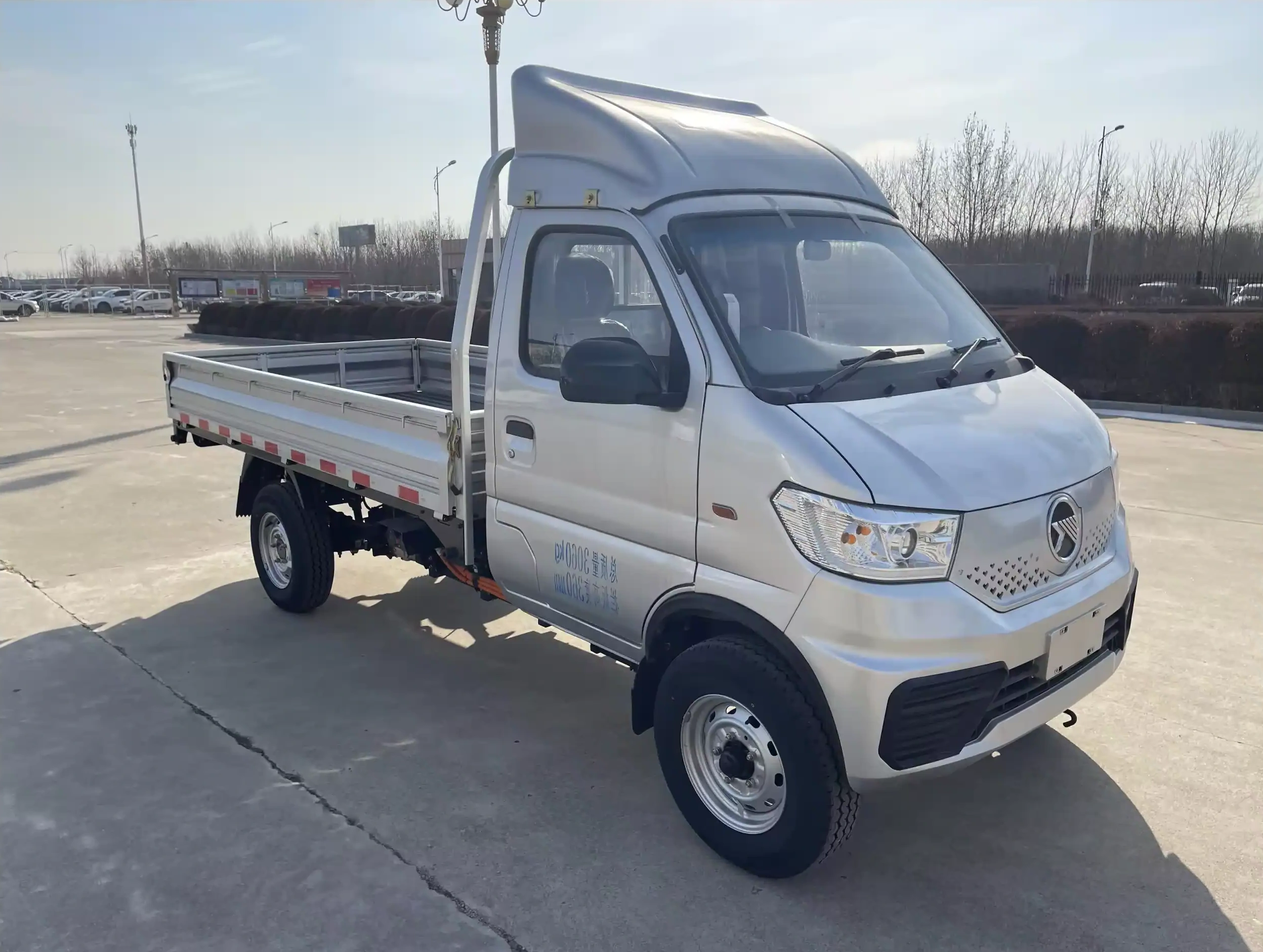
KAMA Auto provides electric mini truck and electric cargo truck options for commercial delivery, city logistics and small business transport. Buyers can choose configurations based on payload, route and local road conditions.
3. Compare Battery Type, Range and Charging Standard
Battery configuration directly affects cost, range and user experience. Many electric mini trucks use LFP batteries because they offer strong safety, long cycle life and stable performance for commercial use.
When comparing EV mini truck suppliers, buyers should ask:
What battery type is used?
What is the rated driving range?
What is the real-world range under load?
What charging standard is supported?
How long does charging take?
Can the charging connector be adapted for the target market?
Is battery maintenance guidance available?
A longer range is not always the best choice. If the vehicle only runs 60 to 100 km per day and returns to a depot every night, a moderate battery capacity may reduce purchase cost. If the vehicle works all day in delivery routes, a longer range or faster charging solution may be necessary.
This is why importers should choose vehicles based on daily route data, not only the highest number on a specification sheet.
4. Make Sure the Vehicle Fits Local Regulations
Export markets have different rules for lighting, emissions, road registration, steering position, charging interface and safety standards. A reliable China commercial vehicle exporter should help buyers confirm whether the vehicle can meet local market requirements.
Important points include:
LHD or RHD configuration
VIN and export documents
Certificate of origin
Technical specification sheet
Lighting and mirror requirements
Brake and safety configuration
Local registration support documents
For some markets, importers may first introduce vehicles for private area use, industrial parks, resorts, farms or closed logistics operations. For public road registration, additional compliance documents may be required.
5. Spare Parts and After-Sales Support Are Critical
Commercial vehicles are working tools. If a truck stops working, the customer loses money. This is why spare parts support should be checked before the first order.
Importers should ask the supplier:
Which spare parts are recommended for the first shipment?
Can the supplier provide a parts catalog?
Are common parts easy to replace?
Can local technicians receive support?
Is remote technical support available?
What is the warranty policy?
Can the supplier provide training materials?
For new distributors, spare parts planning is especially important. A good first order should not only include vehicles. It should also include fast-moving parts, maintenance guidance and technical support.
6. Consider CKD/SKD Cooperation for Long-Term Market Growth
If the target market has import duties, local assembly incentives or a growing commercial vehicle industry, CKD/SKD cooperation may be valuable.
CKD/SKD cooperation can help importers:
Reduce logistics and import cost in some markets
Build local assembly capability
Improve after-sales response
Customize vehicles for local demand
Strengthen distributor competitiveness
Support government or fleet projects
For electric mini trucks and light commercial vehicles, CKD/SKD can also make it easier to adapt cargo bodies, colors, branding and local parts requirements.
KAMA Auto supports global commercial vehicle buyers with vehicle export, customized configuration and CKD/SKD cooperation. This helps importers move from simple trading to long-term market development.
7. Choose a Supplier With a Complete Commercial Vehicle Portfolio
Many importers start with one product, but market demand is rarely limited to one model. A customer interested in an EV mini truck may later need an electric van, gasoline mini van, diesel light truck or spare parts supply.
Working with a manufacturer that offers a broader commercial vehicle portfolio can help distributors build a stronger business.
Useful product categories include:
Electric mini truck
Electric cargo truck
Electric van
Fuel light truck
Gasoline mini van
Diesel cargo truck
Double cabin light truck
Spare parts and after-sales support
CKD/SKD commercial vehicle solutions
This product structure allows importers to serve city logistics, small business delivery, rural transport, passenger service and fleet customers with one supply partner.
8. What Importers Should Ask Before Placing an Order
Before confirming an EV mini truck supplier, buyers should ask these questions:
What is the recommended model for my target market?
What is the real payload under daily working conditions?
What is the range under load?
Can the vehicle be supplied in LHD or RHD?
What charging standard is available?
What spare parts should be ordered with the first shipment?
Can the supplier provide export documents and technical files?
Is customization available for cargo box, color, logo or battery configuration?
Can CKD/SKD cooperation be discussed for future orders?
What support is available after delivery?
These questions help buyers avoid short-term mistakes and build a more reliable commercial vehicle business.
Conclusion
Choosing an electric mini truck manufacturer in China should not be based on price alone. Importers need to evaluate the full business package: vehicle configuration, payload, battery, charging, compliance, spare parts, after-sales support and long-term cooperation.
As global demand for electric commercial vehicles grows, EV mini trucks offer a practical opportunity for city delivery, small business logistics and last-mile transportation. The best supplier is not only a vehicle seller, but a partner that understands export markets and commercial operation.
KAMA Auto provides electric mini trucks, electric cargo trucks, fuel light trucks, gasoline mini vans, diesel cargo trucks and CKD/SKD commercial vehicle solutions for global buyers.
If you are looking for a reliable electric mini truck supplier in China, contact KAMA Auto to get specifications, export configuration and cooperation options for your market.