Welcome to KAMA Auto
Africa’s EV Import Window Is Opening: Why Electric Commercial Vehicles Are Becoming a Smart Choice
Africa’s Electric Mobility Market Is Moving Faster in 2026
The African electric vehicle market is entering a more practical and business-oriented stage in 2026. For many years, EV discussions in emerging markets were mainly focused on passenger cars or pilot projects. Today, the demand is shifting toward vehicles that can directly support business operations: electric cargo vans, electric mini trucks, electric minibuses, school transport vehicles and urban delivery fleets.
For importers, dealers, fleet operators and public transport companies, this change is important. Electric commercial vehicles are no longer only an environmental choice. They are becoming a cost-control tool, a fleet modernization solution and a new business opportunity for distributors in fast-growing markets.
Policy Support Is Creating a Better Import Environment
One of the strongest signals this year comes from Kenya, where the government announced a duty-free window for the first 100,000 imported electric vehicles. This type of policy can significantly improve the business case for EV importers, especially for commercial vehicles used in logistics, passenger transport, school transport, municipal service and last-mile delivery.
For B2B customers, import duty reduction can make electric vehicles more competitive against diesel and gasoline models. When the purchase cost becomes more attractive, fleet buyers can pay more attention to total operating cost, charging cost, maintenance savings and long-term vehicle utilization.
This is especially relevant for African markets where fuel prices, import costs and vehicle maintenance expenses directly affect fleet profitability.
Charging Infrastructure Is Becoming a Key Market Driver
Charging infrastructure has always been one of the biggest concerns for commercial EV buyers in Africa. However, the situation is improving. New charging projects, solar-powered charging solutions and off-grid charging stations are being developed in several African markets.
For commercial vehicle users, this trend is more important than the number of passenger EVs on the road. Fleet operators usually have fixed routes, depot parking areas and predictable daily mileage. This means they can build a practical charging plan more easily than private vehicle owners.
For example, an electric cargo van used for urban delivery can charge overnight at the warehouse. An electric minibus used for school or community transport can operate on a scheduled route and return to a fixed charging point. An electric mini truck used for municipal service or short-distance logistics can be charged during idle hours.
The key is not only public charging availability. The real opportunity is combining vehicles, route planning, charging equipment and after-sales support into one workable fleet solution.
Why Electric Commercial Vehicles Fit African Fleet Needs
Compared with passenger EVs, electric commercial vehicles have clearer business value in emerging markets. They are purchased for daily operation, not only for personal mobility. This makes cost savings easier to calculate.
For many African buyers, the most important advantages include:
Lower operating cost: Electricity is often more stable and cost-effective than gasoline or diesel in daily urban routes, especially for high-frequency stop-and-go driving.
Reduced maintenance: Electric vehicles have fewer moving parts than internal combustion vehicles. For fleets, this can reduce maintenance downtime and improve vehicle availability.
Better for city logistics: EV cargo vans and electric mini trucks are suitable for urban delivery, supermarket distribution, e-commerce logistics, hotel supply, airport service and light municipal transport.
Cleaner public transport: Electric minibuses can support school transport, hotel shuttle service, government fleets, community transport and tourism routes.
Suitable for phased fleet replacement: Importers and operators do not need to replace an entire fleet at once. They can start with sample units, test routes, collect feedback and then scale up.
KAMA Electric Commercial Vehicle Solutions for Importers and Fleets
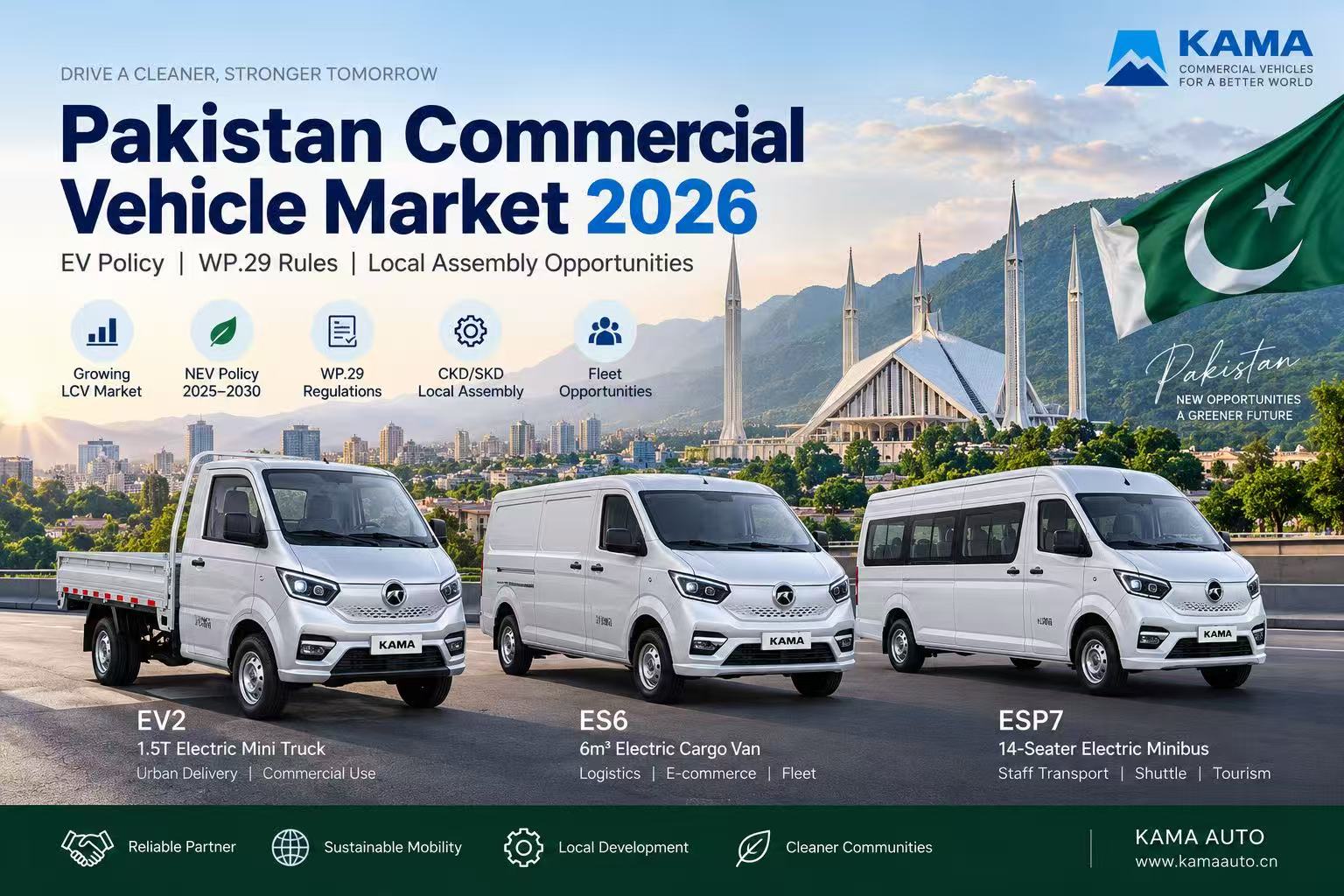
KAMA focuses on practical electric commercial vehicles for overseas markets, especially left-hand-drive electric cargo vans, electric mini trucks and electric minibuses. These vehicles are designed for business use, including logistics, passenger transport, municipal service, campus operation and urban distribution.
For African and other emerging markets, KAMA can support customers with different vehicle solutions according to application scenarios:
Electric Cargo Vans
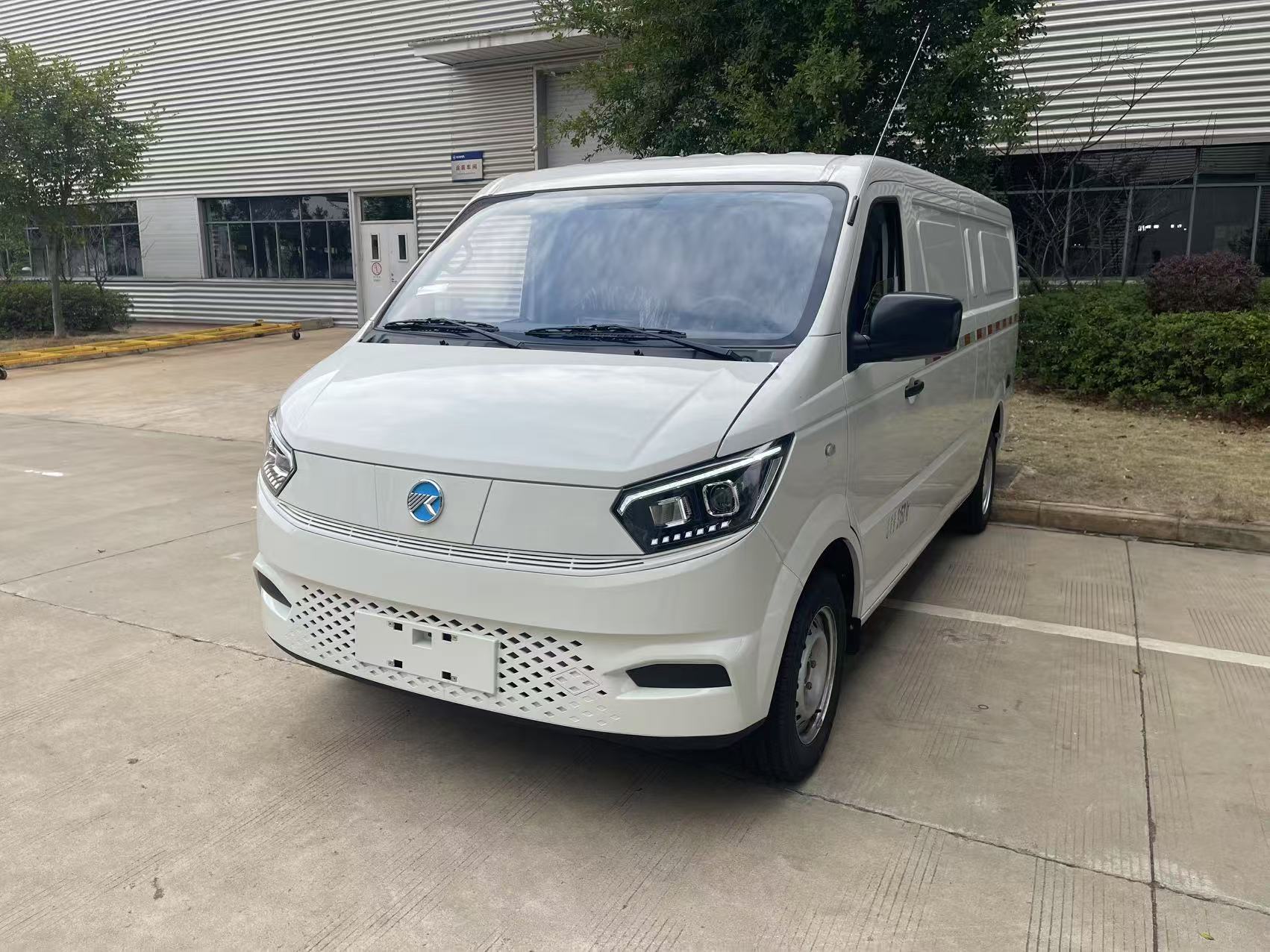
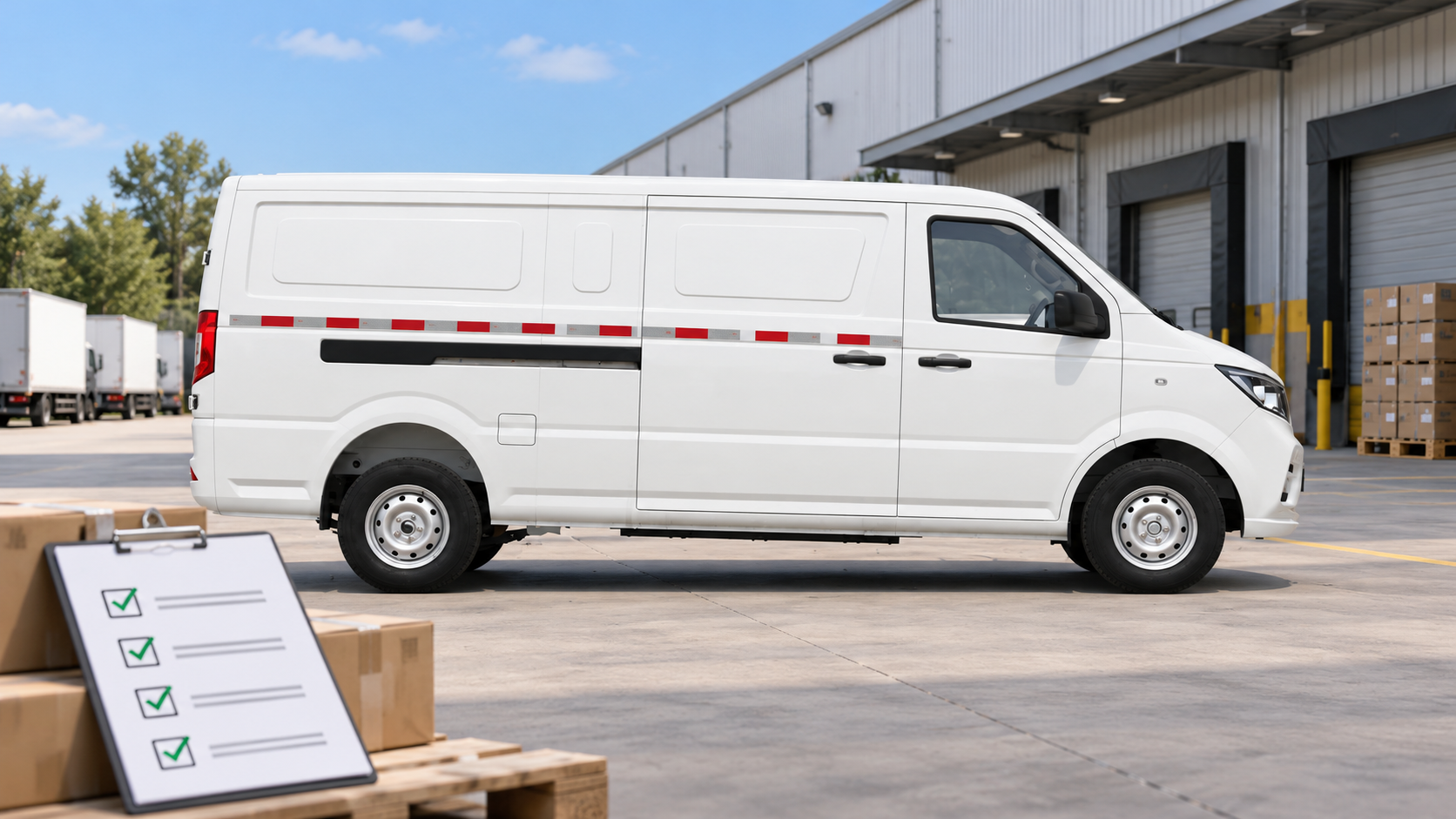
KAMA electric cargo vans are suitable for last-mile delivery, courier service, city logistics, food distribution, spare parts delivery and small business transport. Their enclosed cargo body helps protect goods from rain, dust and high temperatures, which is especially important in many African operating environments.
Electric Mini Trucks
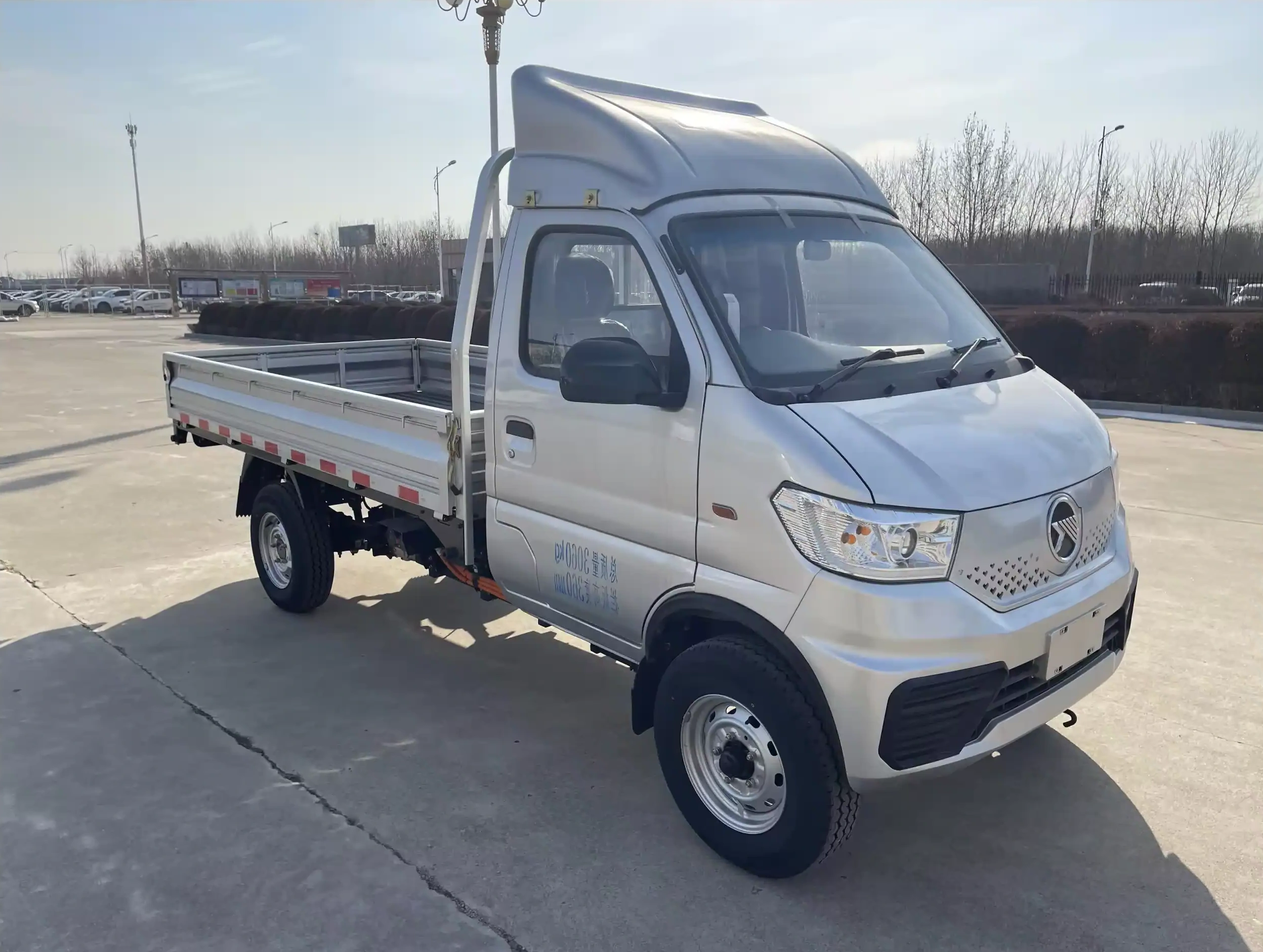
KAMA electric mini trucks can be used for urban goods delivery, agricultural product transport, municipal service, market distribution and small construction material transport. For customers who need flexible cargo bodies, different rear body options can be discussed according to the project.
Electric Minibuses
KAMA electric minibuses are suitable for school transport, staff shuttle, community transport, hotel and tourism routes, and public service applications. For countries developing clean public transport programs, electric minibuses can be an attractive starting point before moving to larger buses.
What B2B Buyers Should Consider Before Importing EVs
Before importing electric commercial vehicles, B2B customers should evaluate several key factors:
1. Daily Mileage
The first question is not “What is the maximum range?” but “What is the daily route?” A commercial EV should be matched with real daily mileage, loading conditions and charging time.
2. Charging Plan
Fleet buyers should confirm whether vehicles will charge at a depot, warehouse, hotel, school, factory or public station. A fixed charging plan makes EV operation much more reliable.
3. Payload and Passenger Capacity
Commercial vehicles must be selected based on actual operation. Cargo volume, payload, seat layout and road conditions are more important than appearance.
4. Local Service Capability
Importers should prepare spare parts, technician training and basic maintenance capability. For long-term fleet projects, after-sales planning is essential.
5. Import Policy and Certification
Each country has different import duty, homologation, certification and registration requirements. Importers should confirm local regulations before placing bulk orders.
The Opportunity for African Importers and Dealers
The EV market in Africa is still developing, which means early importers can build brand awareness, customer trust and after-sales networks before the market becomes crowded. Instead of waiting for full market maturity, dealers can start with practical commercial EV models that solve real business problems.
Electric commercial vehicles are especially suitable for pilot projects with logistics companies, schools, hotels, government departments, industrial parks and delivery operators. Once the first fleet performs well, customers can expand orders more confidently.
For dealers, the opportunity is not only selling vehicles. It is building a complete EV business model: vehicle supply, charging solution, spare parts, technical training, financing support and local service.
Conclusion
Africa’s electric vehicle market is entering a new stage in 2026. Policy support, charging infrastructure development and rising fuel-cost pressure are making electric commercial vehicles more attractive for business users.
For importers and fleet operators, electric cargo vans, electric mini trucks and electric minibuses can provide a practical path to reduce operating costs and modernize transportation services.
KAMA will continue to provide reliable electric commercial vehicle solutions for global B2B customers, with flexible model options, export support and practical vehicle configurations for different markets.